
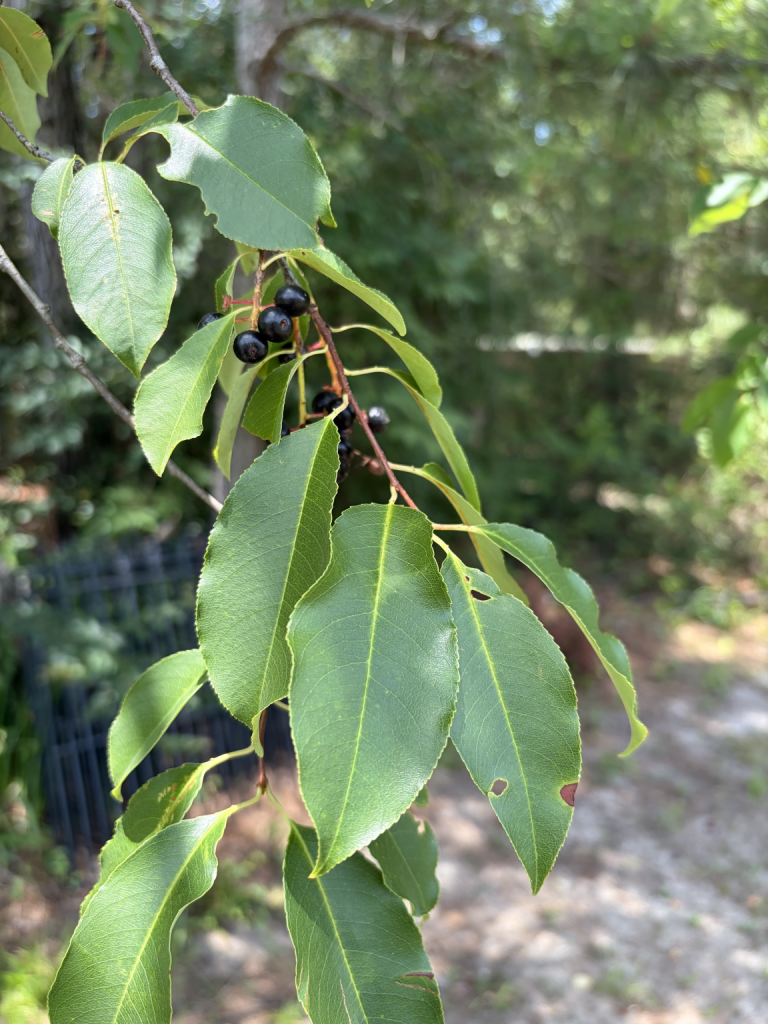
When I was young, they told us that all white berries were poison and all black berries were edible. Red berries were sometimes poison and sometimes edible. Are these berries from a tree on my farm edible?
Note: This is part of a series where I use AI to identify a variety of plants, animals, insects, rocks, diseases, et cetera, with the hopes of illustrating just how useful and interactive AI can be. ChatGPT has a + button next to its entry field with options to upload pictures or use the camera. Easy-peasy.
ChatGPT said:
I would not rely on the old rule. It has many exceptions. For example, some white berries are edible, some black berries are poisonous, and some red berries are perfectly safe.
Looking at your photo, this appears very likely to be a black cherry tree (Black Cherry):
- Long, alternate, finely serrated leaves.
- Small black fruits hanging in elongated clusters (racemes).
- Reddish fruit stems.
If it is black cherry, then:
- The ripe black fruit is edible and has been used for jelly, wine, and preserves.
- The fruit is usually somewhat bitter compared to cultivated cherries.
- The pits (seeds) should not be eaten, as they contain compounds that can release cyanide when crushed.
- Wilted leaves and twigs can be poisonous to livestock.
That said, I can’t safely guarantee identification from a single photo. Before eating any, I’d want to see:
- A close-up of the bark on the trunk.
- A close-up of a leaf showing both upper and lower surfaces.
- A photo of the entire tree.
If you upload those, I can tell you with much greater confidence whether this is black cherry or one of the similar-looking species.
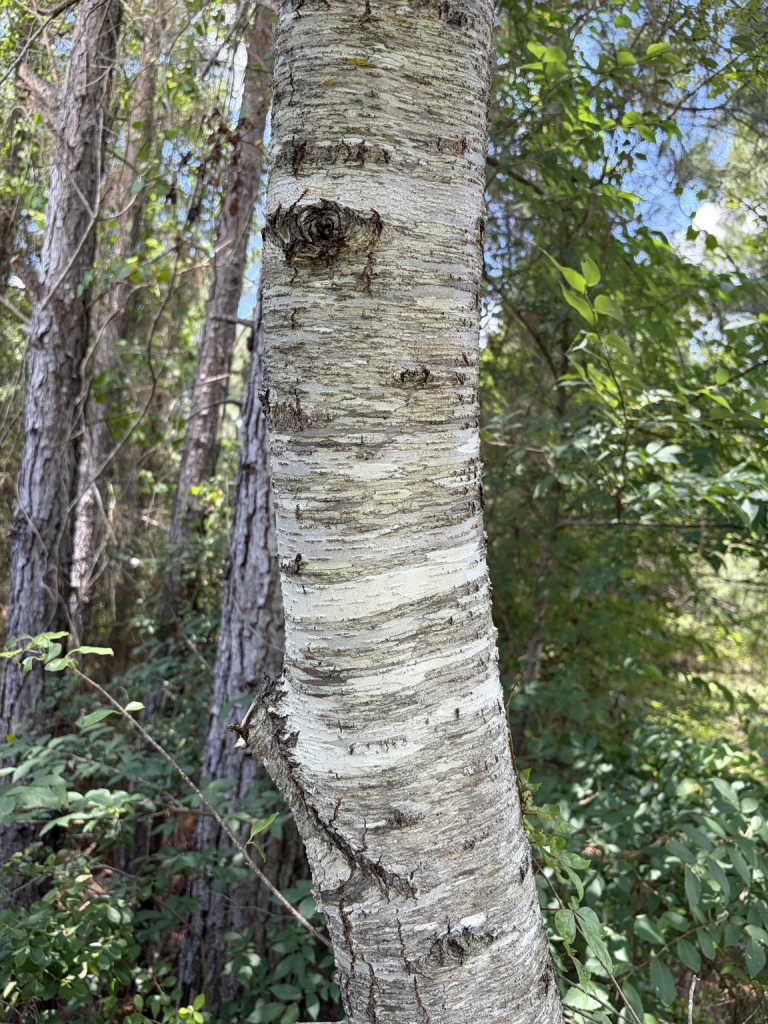
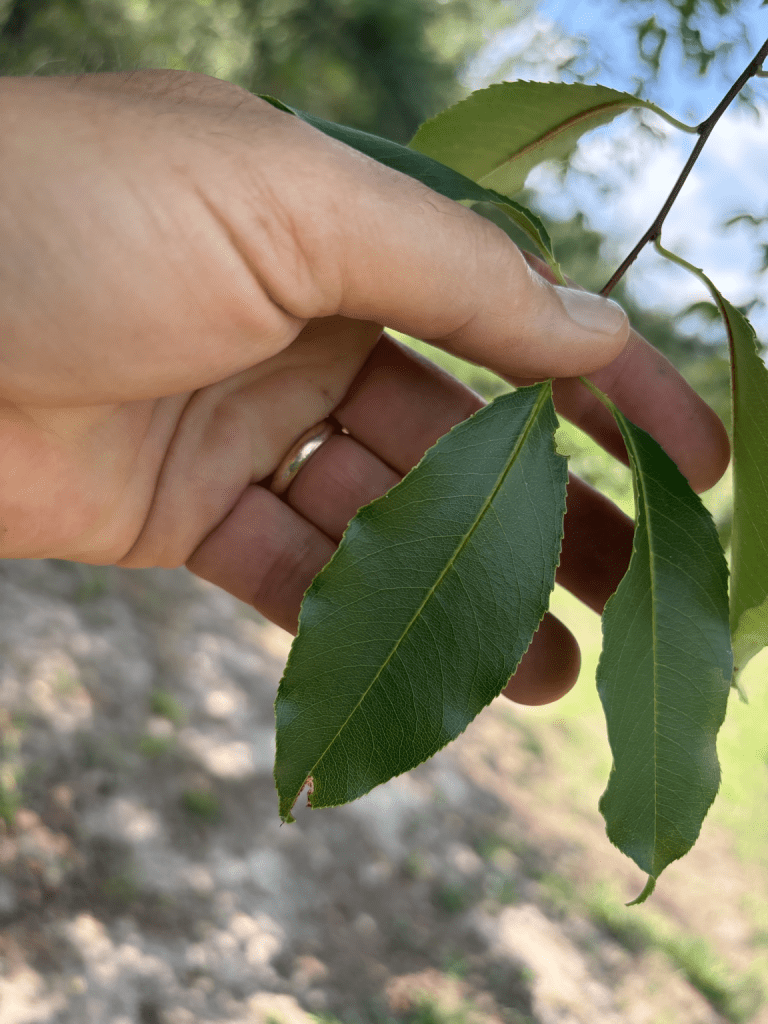
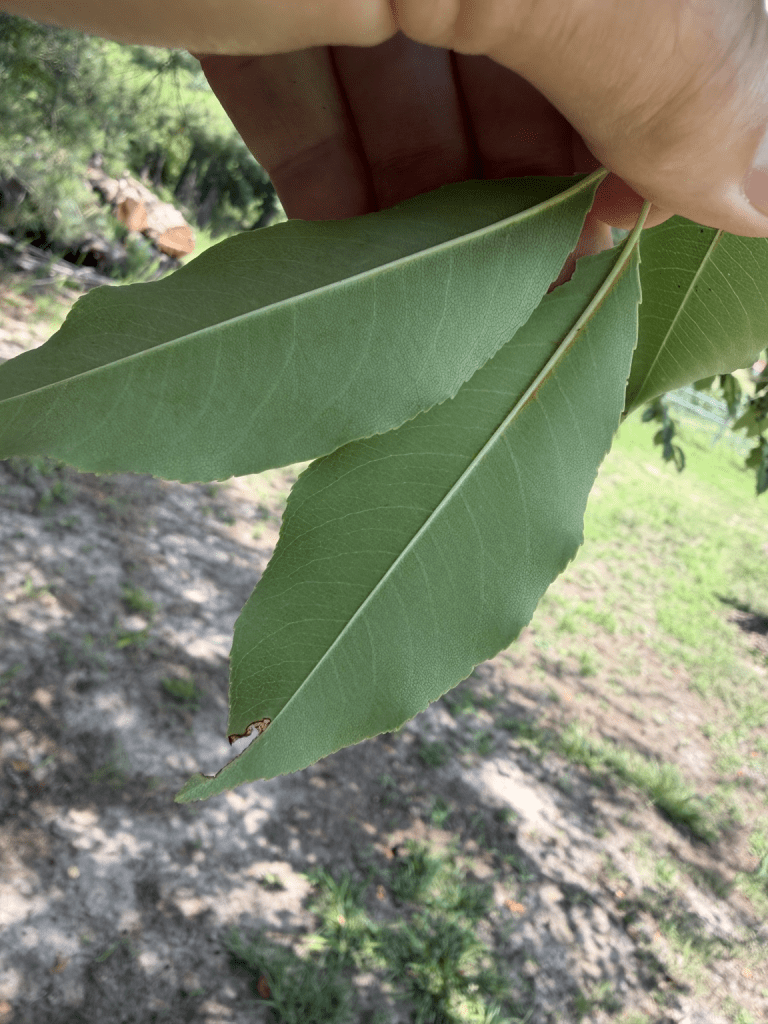
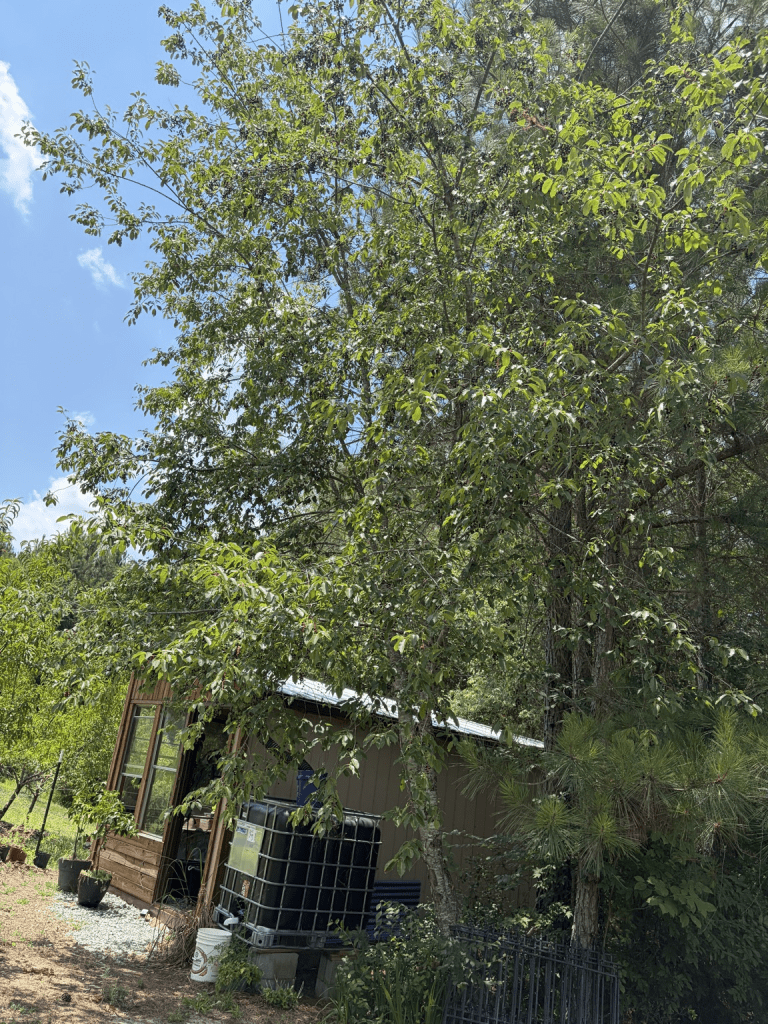
With the additional photos, I’m considerably more confident that this is a cherry, most likely a wild cherry in the genus Prunus. The evidence:
- The bark has the distinctive horizontal lenticels (the horizontal stripes) that cherries are famous for.
- The leaves are alternate, simple, finely serrated, and have the typical cherry shape.
- The fruit hangs in elongated clusters rather than singly.
- The fruit ripens from red to black.
The two most likely candidates in South Carolina are:
- Black Cherry
- Carolina Laurelcherry
Based on the fruit clusters and leaf shape, I’m leaning toward Black Cherry.
Are the berries edible?
If it is Black Cherry, then yes, the ripe black fruits are edible. They’re small, with a relatively large pit and a flavor ranging from sweet to somewhat astringent depending on the tree.
Important cautions
- Eat only the fleshy part.
- Do not chew or crush the pits.
- Do not make tea from wilted leaves.
- Livestock should not browse wilted cherry leaves.
What I would do if I were standing beside you
I would still want one more confirmation step before eating them:
- Pick a ripe fruit.
- Cut or squeeze it open.
- Photograph:
- the whole fruit,
- the inside,
- the pit.
A cherry should have one hard stone (pit) in the center, very much like a tiny cultivated cherry.
If you send that photo, I can probably get from “pretty sure” to “very sure.”
By the way, your childhood rule would have worked surprisingly often around farms because many edible fruits (blackberries, dewberries, cherries, elderberries when cooked, etc.) are dark when ripe. But nature provided enough exceptions that I wouldn’t trust it with anything going into my mouth today.
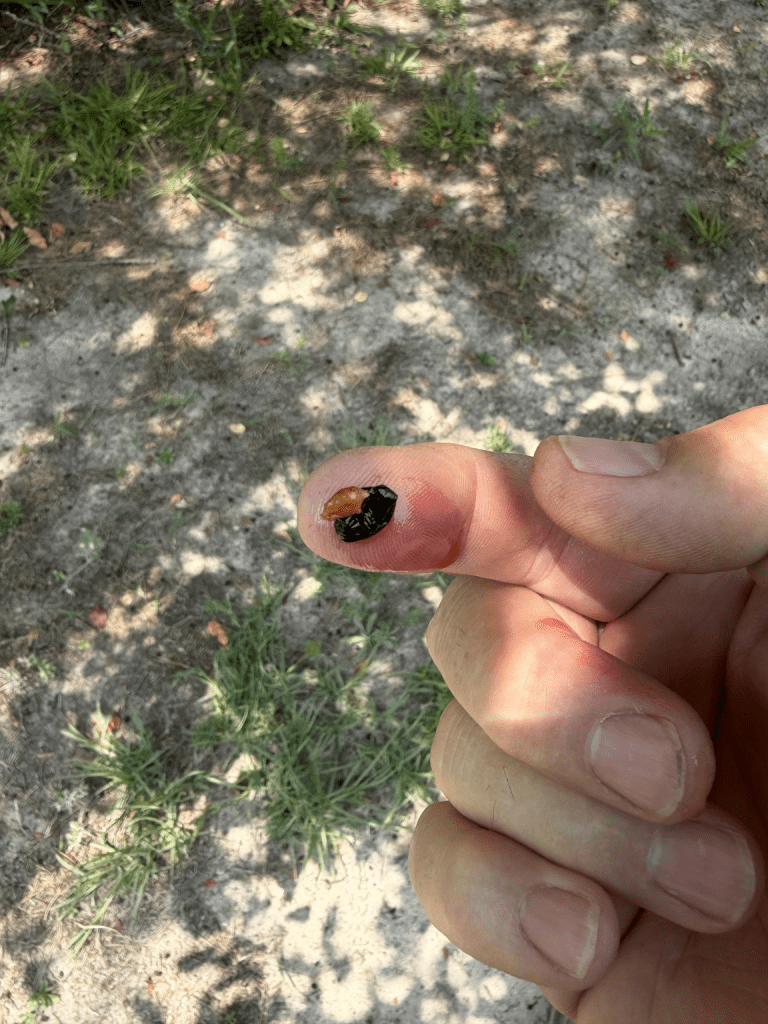
That latest photo actually increases my confidence that this is a wild cherry.
What I can see:
- Dark purple-black skin.
- Purple-red juice staining your finger.
- A single tan seed-like structure in the center.
- The fruit appears to have a relatively thin layer of flesh around the seed, which is typical of wild black cherries.
One thing puzzles me slightly: the seed visible in the photo doesn’t look quite as hard and stone-like as I would expect from a mature black cherry pit. That may simply be because the fruit is very ripe and crushed, or because we’re seeing part of the seed coat rather than the entire pit.
Based on all four sets of photos together:
- Cherry-like bark ✔️
- Cherry-like leaves ✔️
- Cherry-like fruit clusters ✔️
- Cherry-like fruit flesh ✔️
I would put the odds very strongly in favor of this being a wild cherry, most likely Black Cherry.
However, because identification from photos can never be 100%, I still can’t tell you with certainty to eat it. If I were identifying it in person, the final confirmation would be to crack open an intact fruit and verify that there is a single hard pit inside.
A couple of questions:
- Does the fruit taste sweet, bitter, or astringent?
- Is there a single hard stone in the center that feels like a miniature cherry pit?
If the answer to #2 is yes, I think we’ve essentially solved the mystery.
And as a side note, your old childhood rule would have failed on one notorious example: Pokeweed produces very dark purple-black berries that are definitely not something I’d recommend eating. That’s one reason botanists get nervous about color-based rules. 😊
It tasted like a slightly bitter cherry
That description is exactly what I would expect from a wild black cherry.
Putting all the clues together:
✅ Tree form matches a cherry.
✅ Bark has the characteristic horizontal cherry lenticels.
✅ Leaves match black cherry.
✅ Fruit hangs in long clusters.
✅ Fruit is black when ripe.
✅ Flesh is dark purple and stains.
✅ Taste is “slightly bitter cherry.”
At this point I’d be surprised if it were anything other than Black Cherry.
The fruit of black cherry is edible, although most wild trees produce fruit that is smaller and more bitter than grocery-store cherries. Some individual trees are quite good, others are mostly useful for jelly, syrup, wine, or jam.
A few notes:
- Eat the flesh, but don’t chew the pits.
- The pits, leaves, and wilted twigs contain compounds that can release cyanide.
- Birds absolutely love black cherries and often strip a tree quickly once the fruit ripens.
- Black cherry is also one of the most valuable hardwood trees in eastern forests. Cabinet makers prize the wood.
One interesting thing from your photos: the bark is unusually light-colored compared with many mature black cherries. That’s probably because the tree is relatively young. As they age, black cherry trunks typically become much darker and develop rough, flaky bark that some people describe as looking like burnt potato chips.
So if you asked me, “Would I tell my grandson this is a black cherry tree?” the answer would be yes.
As for the old farm rule, I’d revise it to:
“Most black berries are edible, but enough are not that you should identify the plant first.”
Your tree appears to be one of the good ones. 🍒🌳


Leave a comment