
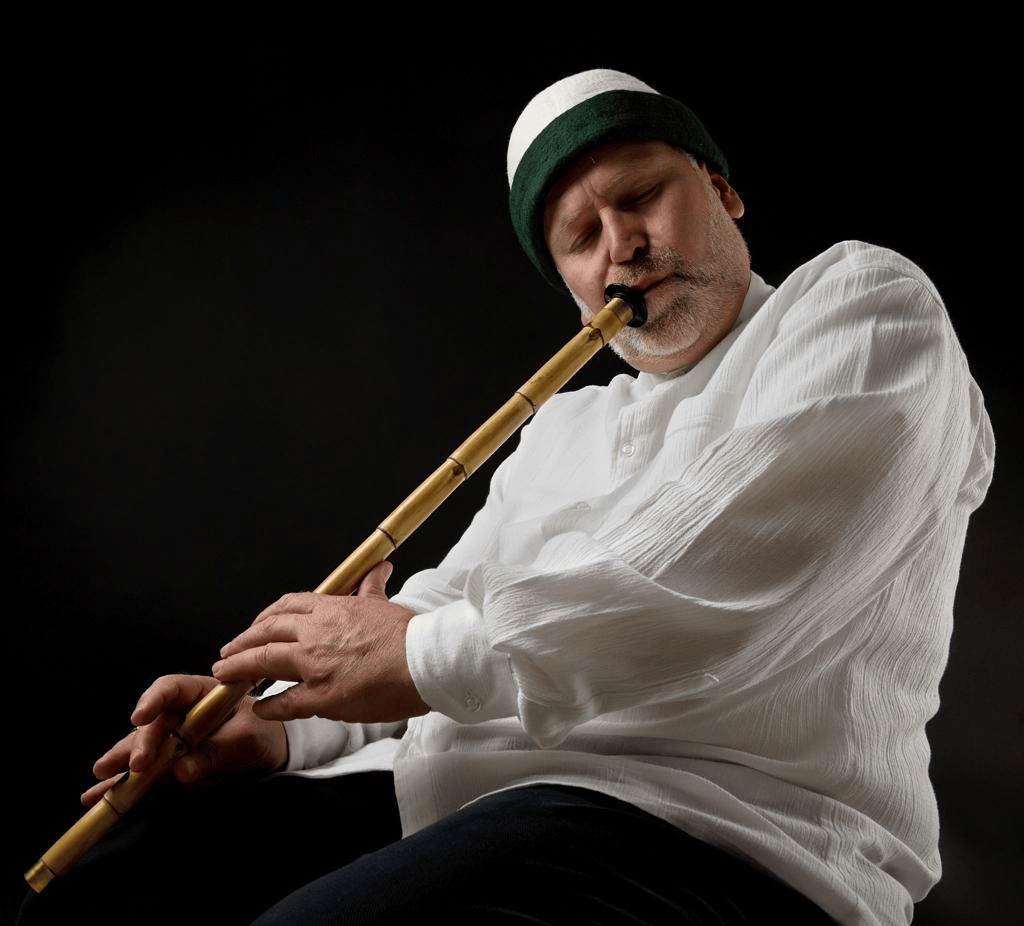
Professional Turkish Ney – Mansur Ney – (LA)
Are there musical scales other than the one used by the piano with 12 notes?
ChatGPT said:
Yes! In fact, the familiar 12-note system used by the piano is just one of many ways humans have divided musical pitch. Other systems have used 5, 7, 17, 19, 24, 31, and even 53 notes per octave. Some musical traditions don’t divide the octave into equal steps at all.
There’s an important distinction, though: a piano has 12 different pitches per octave, but most Western musical scales select only some of those pitches. For example, the C major scale has seven notes: C, D, E, F, G, A, B.
Some alternative musical systems
| System | Notes per octave | Characteristics |
|---|---|---|
| Pentatonic | 5 | Common in Chinese, African, Celtic, and many other musical traditions |
| Western chromatic | 12 | The familiar piano keyboard |
| Arabic maqam | Variable | Uses pitch intervals not generally available on a standard piano |
| 19-tone equal temperament | 19 | Offers different versions of familiar intervals and chords |
| 24-tone equal temperament | 24 | Divides each piano semitone in half, producing quarter tones |
| 31-tone equal temperament | 31 | Can approximate certain pure intervals more closely than a piano |
| 53-tone equal temperament | 53 | Provides very fine distinctions between pitches |
Why did Western music settle on 12?
Part of the answer comes from physics.
When a string vibrates, it produces not only its fundamental frequency but also harmonics at multiples of that frequency.
Certain frequency ratios sound particularly harmonious to human ears:
- 2:1 — an octave
- 3:2 — a perfect fifth
- 4:3 — a perfect fourth
- 5:4 — a major third
If you repeatedly move upward by perfect fifths (multiplying frequency by 3/2), you come remarkably close to returning to your starting note after 12 steps, allowing for octave adjustments.
But not exactly.
This discrepancy led to centuries of experimentation with tuning systems.
The modern piano generally uses 12-tone equal temperament, which divides the octave into 12 mathematically equal steps. Each successive note has a frequency approximately 5.946% higher than the previous note.
This makes it possible to play in any musical key without retuning the instrument, but it sacrifices the exact purity of some intervals.
Here’s where things get especially interesting
A piano octave versus a 24-tone octaveSchematic comparison: the second system includes pitches halfway between the piano’s usual notes.
Imagine playing a melody in which some notes fall halfway between adjacent piano keys. To someone accustomed exclusively to Western music, those notes might initially sound out of tune.
But to someone raised in a musical tradition that uses those intervals, they can be perfectly natural and expressive.
And there is another possibility: just intonation, in which notes are selected according to simple frequency ratios rather than equal divisions of the octave. This can produce exceptionally pure-sounding chords, although changing keys becomes more complicated.
One fascinating consequence is that the physics of sound does not dictate a unique musical scale. Physics gives us relationships between frequencies, but human cultures have developed many different ways of organizing those relationships into music.
That raises a question I find particularly interesting: Are certain musical intervals inherently pleasing because of physics, or do we learn to find them pleasing because of the music we grow up hearing?
The evidence suggests both physics and cultural learning play important roles.
Can you find an audio of a musical system that cannot be played on the piano for me to hear? I’m thinking of an actual instrument, not a synthesizer.
ChatGPT said:
Turkish classical music uses a system of makams, many of which incorporate intervals that cannot be played exactly on a normally tuned piano. I would especially recommend the Turkish ney if your interest is in hearing how a different musical system developed naturally within a culture, rather than hearing an experimental instrument deliberately designed to challenge Western tuning.


Leave a Reply