
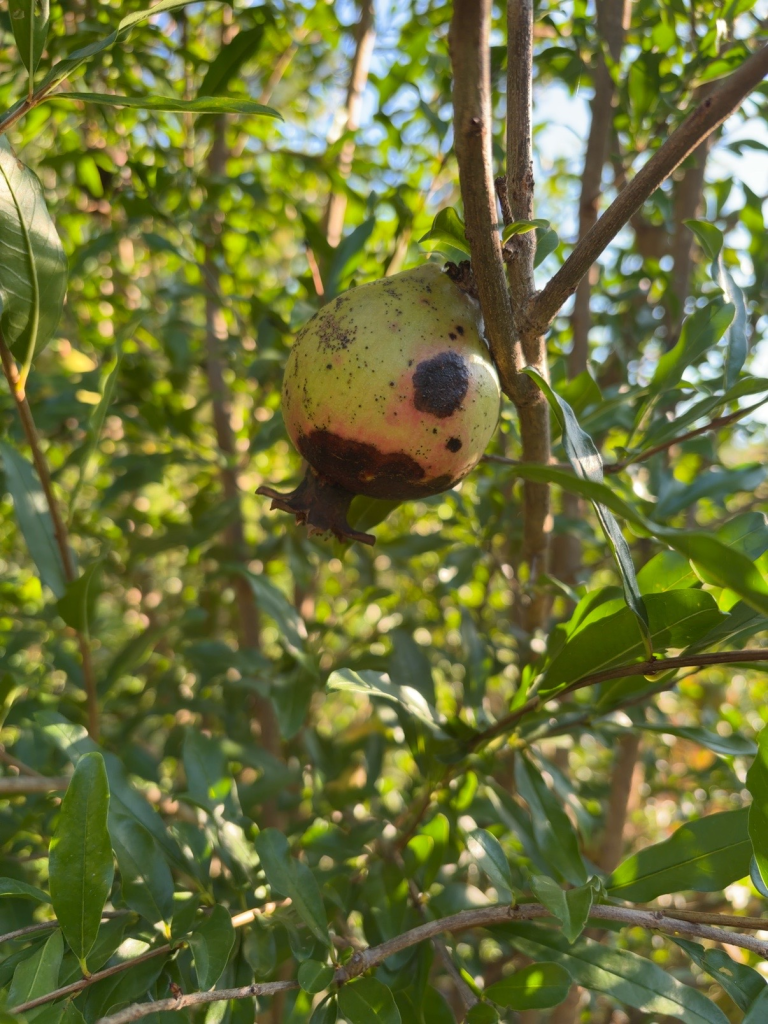
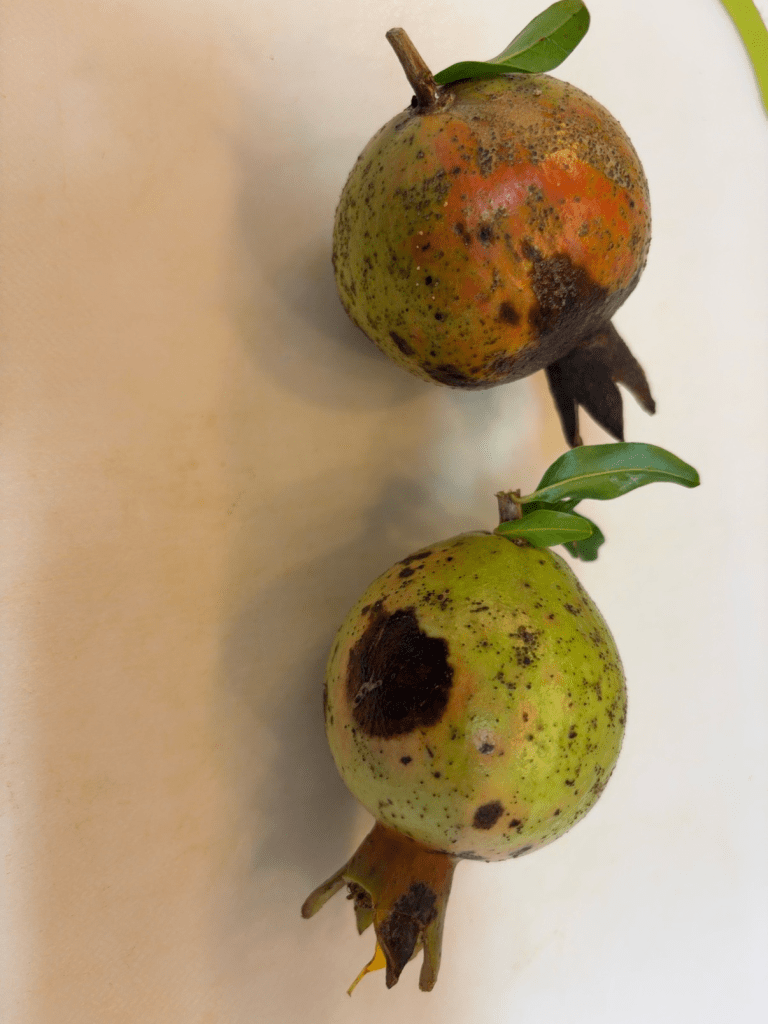
This is my first year with significant pomegranate fruit, but some appear to have a fungus. What’s going on here? I’m familiar with pomegranate bushes in California over 50 years ago and don’t remember this problem.
Note: This is part of a series where I use AI to identify a variety of plants, animals, insects, rocks, diseases, et cetera, with the hopes of illustrating just how useful and interactive AI can be. ChatGPT has a + button next to its entry field with options to upload pictures or use the camera. Easy-peasy.
An audible version of this post can be found on YouTube below followed by more images that I sent to AI.
ChatGPT said:
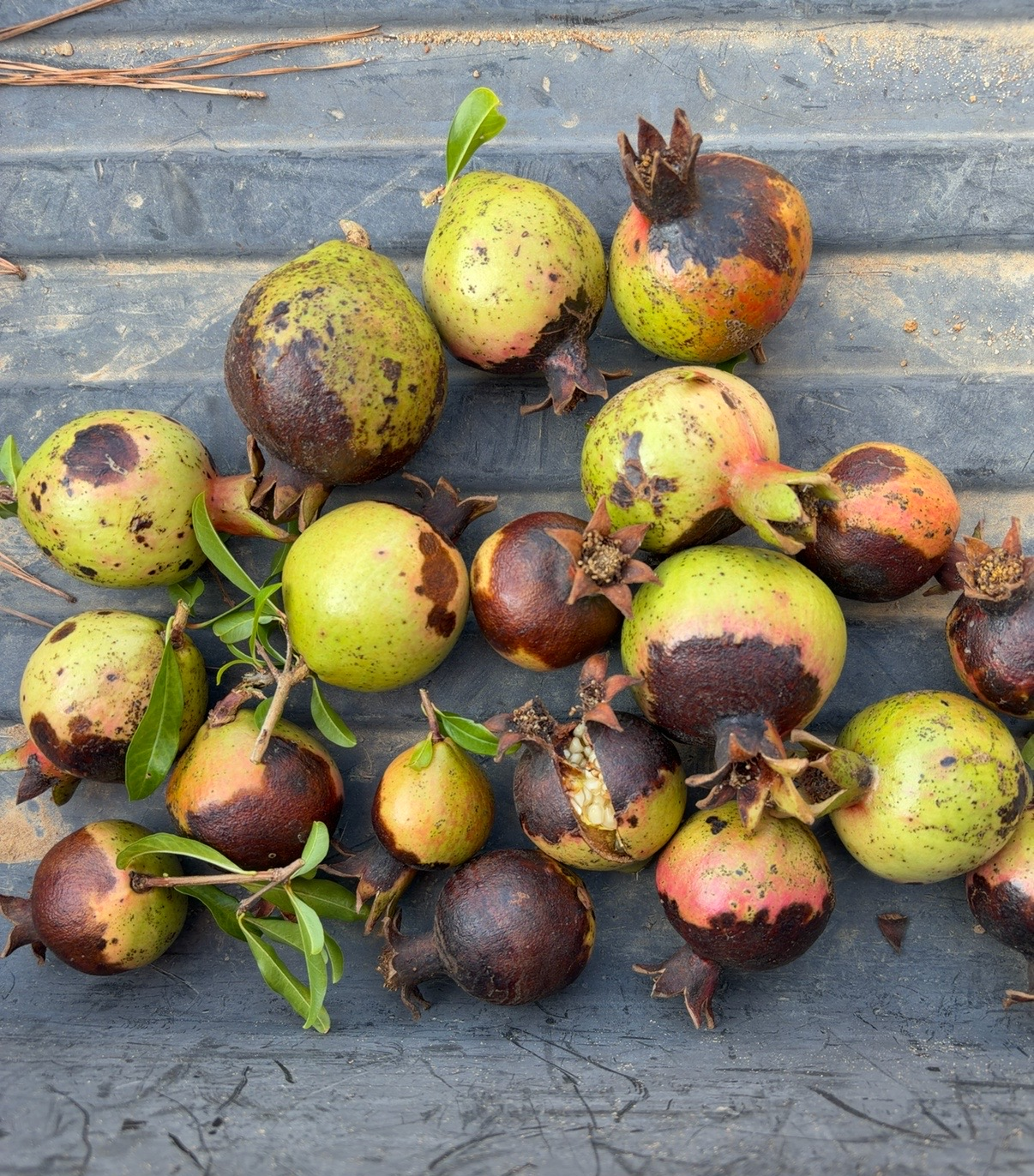
Brad, these photos are actually quite helpful. The pattern tells a story.
My first impression is that this is not a typical leaf fungus spreading randomly over the plant, but rather a fruit disease, most likely one of these:
- Anthracnose (most likely)
- Alternaria fruit rot (black heart) (possible)
- Bacterial blight (less likely from these photos)
Why I think anthracnose is the leading candidate
The fruit shows:
- Large black, sunken patches
- Numerous small black specks surrounding the larger lesions
- Lesions beginning on the surface while the fruit is still green
- Many fruits affected simultaneously
Those are classic anthracnose symptoms. The fungus infects flowers or very young fruit, then often becomes obvious as the fruit enlarges.
What makes me think it isn’t simply sunburn
Sunburn usually:
- occurs only on the southwest side of exposed fruit
- produces tan or brown leathery patches
- doesn’t create all those tiny black pepper-like spots
Your fruit has numerous small spots and expanding dark lesions, which points much more toward disease.
California versus South Carolina
This is probably the biggest reason you’re seeing something now.
California’s pomegranate climate is almost ideal:
- long hot summers
- very low humidity
- little summer rainfall
South Carolina gives the fungus exactly what it wants:
- warm temperatures
- high humidity
- afternoon thunderstorms
- leaves and fruit staying wet for hours
Many fruit diseases that barely exist in California become annual problems in the Southeast.
The good news
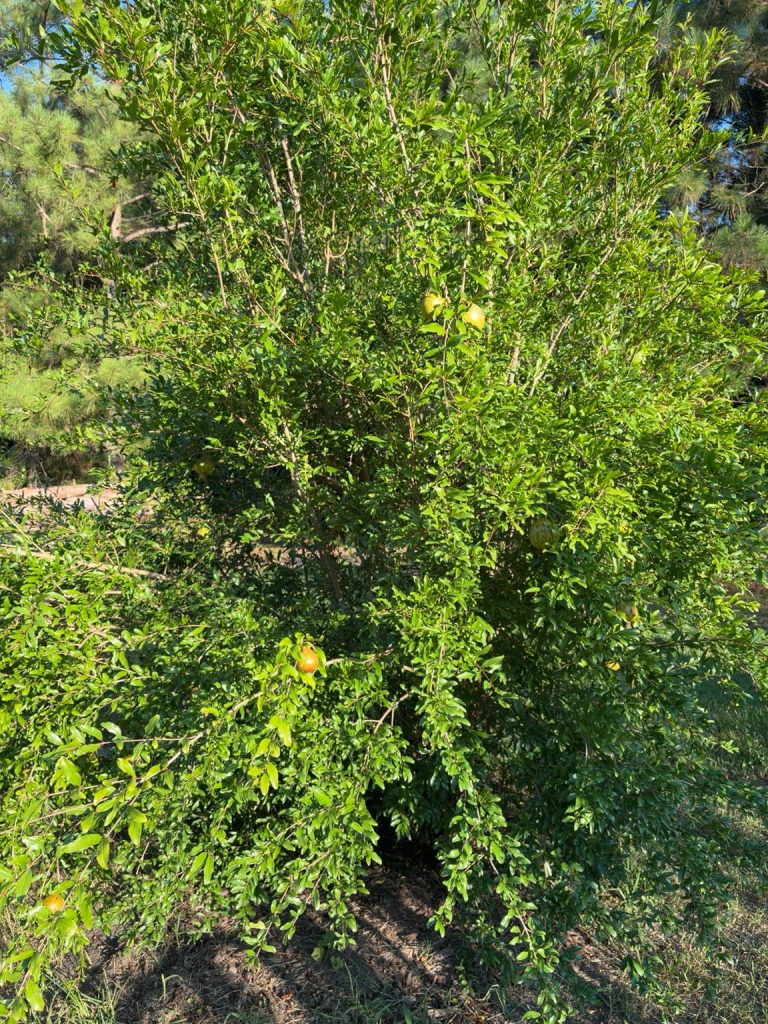
Your bush itself actually looks vigorous.
From the whole-plant photo I notice:
- dense healthy foliage
- good color
- lots of fruit
- no obvious dieback
That suggests the plant is healthy—the disease is primarily attacking the fruit.
What I would do
For this season:
- Remove badly infected fruit from the bush.
- Pick up fallen fruit promptly.
- Don’t compost infected fruit unless your compost gets very hot.
- Improve airflow by thinning some of the crowded interior branches this winter.
Next spring:
- Watch the flowers closely.
- If we have a wet spring, consider a preventative fungicide labeled for pomegranates (copper products are commonly used in home orchards). Prevention is much more effective than trying to stop the disease once the fruit shows symptoms.
One thing I noticed
A couple of fruits in your photos have lesions concentrated around the blossom end (where the “crown” is), while others have isolated round spots on the side.
That combination makes me also wonder about Alternaria, because it often enters through the blossom end and can rot the fruit internally while the outside still looks fairly normal. If you cut one of the fruits that looks only mildly affected and find the inside black or moldy while the rind isn’t terribly damaged, Alternaria moves higher on the list.
Could you answer three questions?
- What variety is this? (Wonderful, Angel Red, or unknown?)
- Roughly where in South Carolina are you? (Midlands, Upstate, Lowcountry?)
- When you cut open one of the affected fruits, what does the inside look like?
- normal seeds
- some rotten sections
- completely black inside
That third answer will go a long way toward distinguishing anthracnose from Alternaria.
One final observation: for a first significant crop, the bush appears to be carrying an impressive fruit load. Once you get this disease sorted out, I think you’ll have a very productive plant. The plant itself looks much healthier than the fruit currently does.
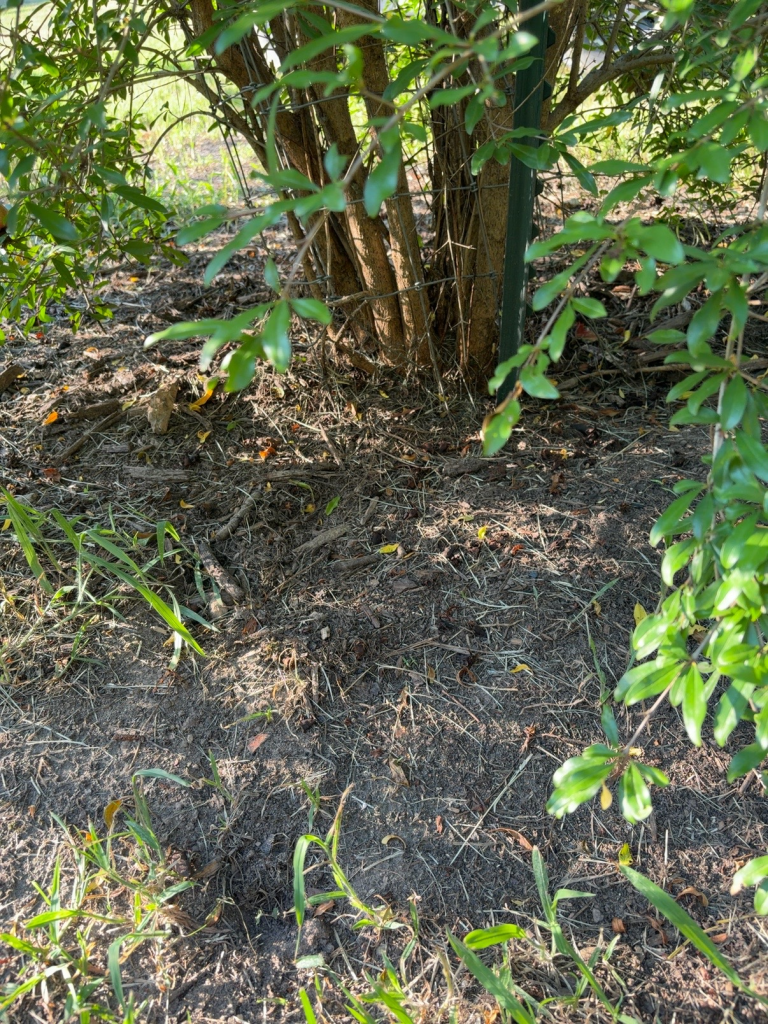
There has been mulch applied in the past. Should I clean the ground and quit using mulch?
No—I would actually continue using mulch, but I’d change how it’s being used.
Looking at your photo, I notice several things:
- The base of the plant is fairly open, which is good.
- I don’t see a thick, soggy layer of mulch pressed against the trunks.
- The soil looks rather bare and dry now.
- There are old leaves and fruit debris under the bush.
The mulch itself probably isn’t causing the fruit disease. The bigger issue is that infected fruit and leaves can harbor fungal spores that reinfect the plant the following spring.
Here’s what I would do this fall
- Clean up thoroughly.
- Pick up every fallen pomegranate.
- Remove mummified fruit still hanging in the bush.
- Rake out as many diseased leaves and fruit pieces as practical.
- Refresh the mulch.
- After cleanup, apply 2–3 inches of fresh wood chips or pine bark.
- Keep it about 6 inches away from the trunks so moisture doesn’t stay against the bark.
- Prune this winter.
Your bush is quite dense. In California that isn’t much of an issue, but in South Carolina I’d remove several interior stems to let sunlight and air move through the canopy. Faster drying after rain is one of your best defenses. - Avoid overhead irrigation.
If you irrigate, water the soil rather than wetting the foliage.
One thing I noticed from your earlier pictures
Several fruits are hanging inside the shrub rather than out on the edges. Those interior fruits stay damp much longer after our humid South Carolina mornings and afternoon thunderstorms. That’s another reason I’d open up the center of the plant.
If this were my bush…
I would not eliminate mulch. In our South Carolina summers, mulch is valuable because it:
- conserves moisture,
- moderates soil temperature,
- improves the soil as it decomposes, and
- reduces competition from weeds.
The key is sanitation first, mulch second.
One question for you: How old is this pomegranate?
I’m asking because it appears to have been allowed to develop into a many-stemmed shrub with quite a dense interior. Depending on its age, I might recommend a fairly substantial thinning this winter. I think you could improve both fruit quality and disease resistance without sacrificing much of next year’s crop.
Here are two pomegranates, cut open.

This is very helpful. The interior changes my diagnosis.
The fruit does not look like classic Alternaria (“black heart”). If it were, I would expect much of the inside to be black and moldy while the outside might not look terribly bad.
Instead, I see:
- The arils are still white because the fruit is immature.
- Most of the interior is healthy.
- There is some browning of the membranes immediately beneath the worst external lesions.
- The rot appears to be progressing from the outside inward, not starting deep inside.
That pushes me back toward anthracnose or another surface fruit rot rather than black heart.
The encouraging news
The disease hasn’t destroyed the fruit internally. If this had happened a month later, many of these pomegranates might still have been edible after trimming away the damaged portions.
One thing catches my eye
The lesions are remarkably round and well defined. In the lower fruit, there’s almost a “bull’s-eye” appearance. That sometimes happens where a fungal spore lands on a wet fruit and begins growing from that exact point.
Here’s what I’d do over the next year
Now
- Remove every diseased fruit, whether on the bush or on the ground.
- Dispose of them rather than leaving them under the shrub.
Winter
- Thin out perhaps 20–30% of the interior wood. Your shrub has many stems, which is normal for pomegranates, but I’d selectively remove some of the oldest or most crowded canes to improve air circulation.
Spring (important)
- As flowers begin to appear, if your weather turns into one of those warm, rainy South Carolina springs, consider a preventive copper fungicide. Once these lesions appear, fungicides do very little, so the timing is before infection.
One other thought
I’m curious about the variety. The fruit are fairly small and still pale inside, which makes me wonder if this is a hardy ornamental or seedling rather than one of the large commercial cultivars. If it’s a named variety like ‘Wonderful,’ the fruit should eventually color up much more.
I have one question that may solve the mystery.
Did we have an unusually wet spring in your part of South Carolina this year?
If these infections started during flowering and early fruit set, a rainy bloom period would fit this almost perfectly.
One final observation, and it’s an encouraging one: the bush itself appears healthy enough that I don’t think you’re fighting a chronic decline. This looks much more like a disease favored by this season’s weather than a plant that’s in poor health. With better sanitation, a little thinning, and possibly a preventive spray next spring if conditions are wet, I think you have a good chance of seeing a much cleaner crop next year.
Yes, we had a wet early spring and a dry late spring. Will this fungicide work?
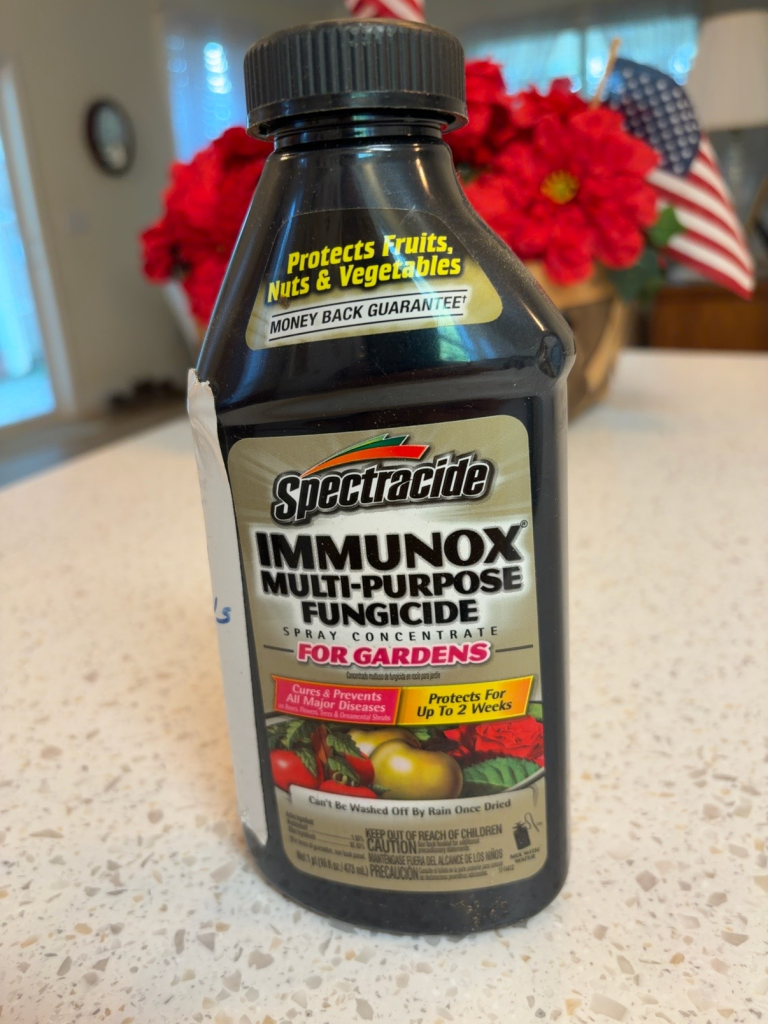
Yes, the wet early spring followed by a dry late spring fits the disease pattern very well. Infection likely occurred while the flowers and tiny fruit were wet, and the symptoms simply became visible as the fruit grew.
As for the fungicide in your photo:
Spectracide Immunox contains myclobutanil, which is an excellent fungicide for many diseases such as powdery mildew, rusts, and black spot on roses. It also has activity against some anthracnose fungi.
However, there are two important considerations:
- Check the label carefully. Since you’re growing fruit you intend to eat, the label must specifically allow use on the crop (or group of crops) you’re treating. If pomegranate is not listed, I would not use it on fruit intended for consumption.
- Timing matters much more than the product. By the time the fruit looks like yours does, the infection has already happened. Spraying now won’t heal the damaged fruit. The spray is most useful next spring, beginning around bloom or just after petal fall if the weather turns warm and rainy.
My recommendation
For your situation in South Carolina, I would lean toward this plan:
- This year: Sanitation only.
- Remove diseased fruit from the bush and the ground.
- Prune this winter to open the canopy.
- Next spring: If forecasts call for several days of warm, rainy weather during bloom, begin preventive fungicide applications according to the product label. Many home orchardists in the Southeast have good success with copper-based fungicides for pomegranates because they are broadly effective against many fruit diseases and are commonly labeled for edible fruit crops.
One thing I noticed in your photo: the Immunox bottle looks like you’ve had it for a while. If it’s several years old, check the date and make sure it hasn’t been exposed to freezing or excessive heat. Even if it’s still usable, I’d verify that the current label includes the crop you want to treat.
Overall, I think your pomegranate has a good future. The shrub itself looks vigorous, and I suspect next year’s crop could be dramatically cleaner with:
- good cleanup this fall,
- some interior thinning this winter,
- and preventive protection only if next spring is wet again.
I think you’re much closer to solving this than replacing the bush.
Note: After culling the fruit as suggested by AI, we have just gone through a period of almost daily rain and very high humidity. This required a second culling. About one more episode of this and there will be a very sparse harvest.


Leave a comment