
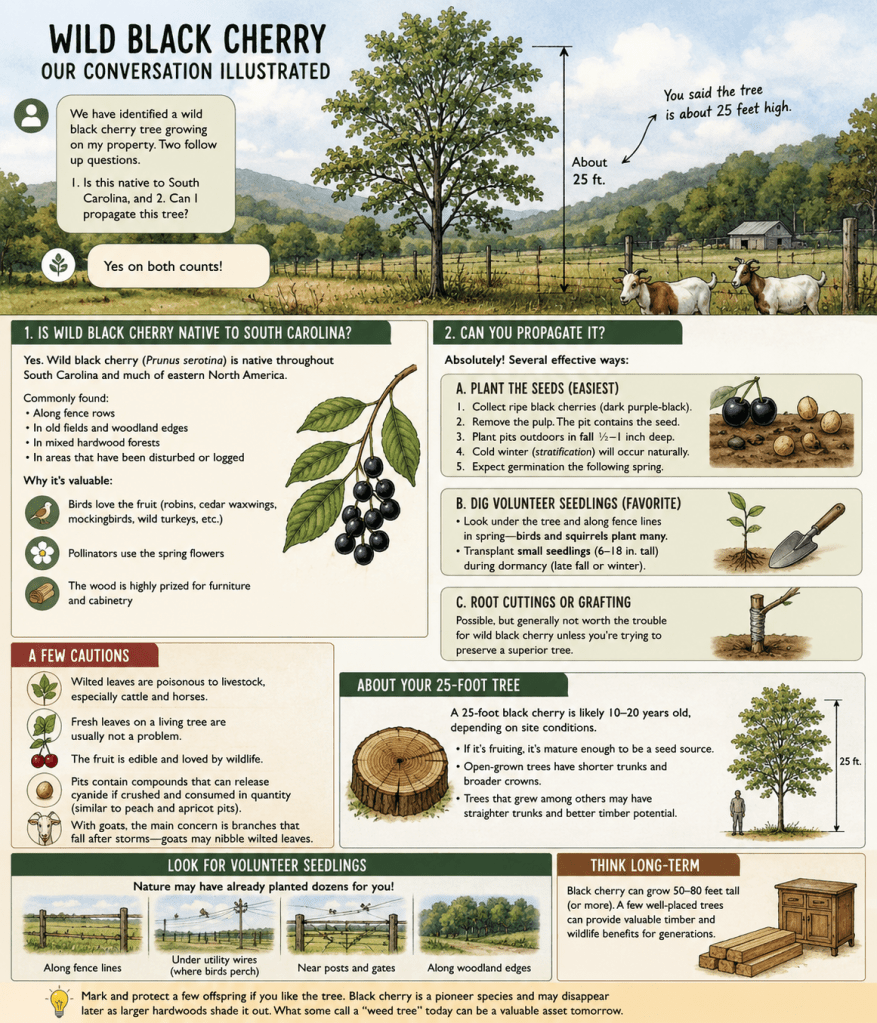
We have identified a wild black cherry tree growing on my property. Two follow up questions. 1. Is this native to South Carolina, and 2. Can I propagate this tree?
ChatGPT said:
Yes on both counts.
1. Is wild black cherry native to South Carolina?
Yes. The species you likely identified is Black Cherry, which is native throughout South Carolina and much of eastern North America.
Black cherry is commonly found:
- Along fence rows
- In old fields and woodland edges
- In mixed hardwood forests
- In areas that have been disturbed or logged
It is considered a valuable native tree because:
- Birds love the fruit (robins, cedar waxwings, mockingbirds, wild turkeys, etc.)
- Pollinators use the spring flowers
- The wood is highly prized for furniture and cabinetry
If your tree is producing fruit, wildlife almost certainly planted it for you by dropping a seed years ago.
2. Can you propagate it?
Absolutely. There are several ways.
Method A: Plant the seeds (easiest)
This is how nature does it.
- Collect ripe black cherries when they turn dark purple-black.
- Remove the pulp from around the pit.
- The pit contains the seed.
- Plant the pits outdoors in fall about ½–1 inch deep.
Black cherry seeds normally require a cold winter period (called stratification) before they will sprout. Planting them in the fall lets nature handle this.
Expect germination the following spring.
Warning: Don’t let the fruit ferment in a bucket for long. The pits are easier to clean when the fruit is fresh.
Method B: Dig volunteer seedlings
This is my favorite method.
Look beneath the tree and around nearby fence lines next spring. Birds and squirrels often create dozens of volunteer seedlings.
Small seedlings 6–18 inches tall transplant fairly well when dug during dormancy (late fall or winter).
Advantages:
- Faster than starting from seed
- Already adapted to your property
- No stratification required
Method C: Root cuttings or grafting
Possible, but generally not worth the trouble for a wild black cherry unless you’re trying to preserve a particular tree with especially large fruit or excellent timber characteristics.
A few cautions
Black cherry has some interesting characteristics:
- Wilted leaves are poisonous to livestock, especially cattle and horses.
- Fresh leaves on a living tree are usually not a problem.
- The fruit itself is edible.
- The pits contain compounds that can release cyanide if crushed and consumed in quantity (similar to peach and apricot pits), so don’t eat the pits.
Since you have goats, the main concern would be branches that fall after storms. Goats are curious and may nibble wilted leaves.
If you’re thinking long-term timber
Black cherry can become a beautiful tree 50–80 feet tall, occasionally larger. If you have open areas on your 125-acre property, a few carefully placed seedlings could eventually produce valuable lumber while also feeding wildlife.


Leave a comment