
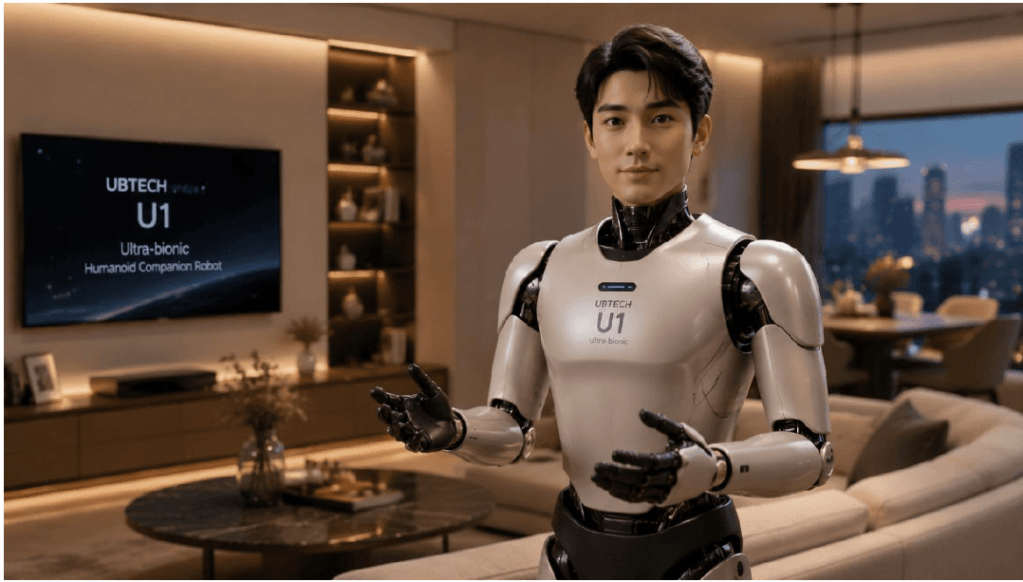
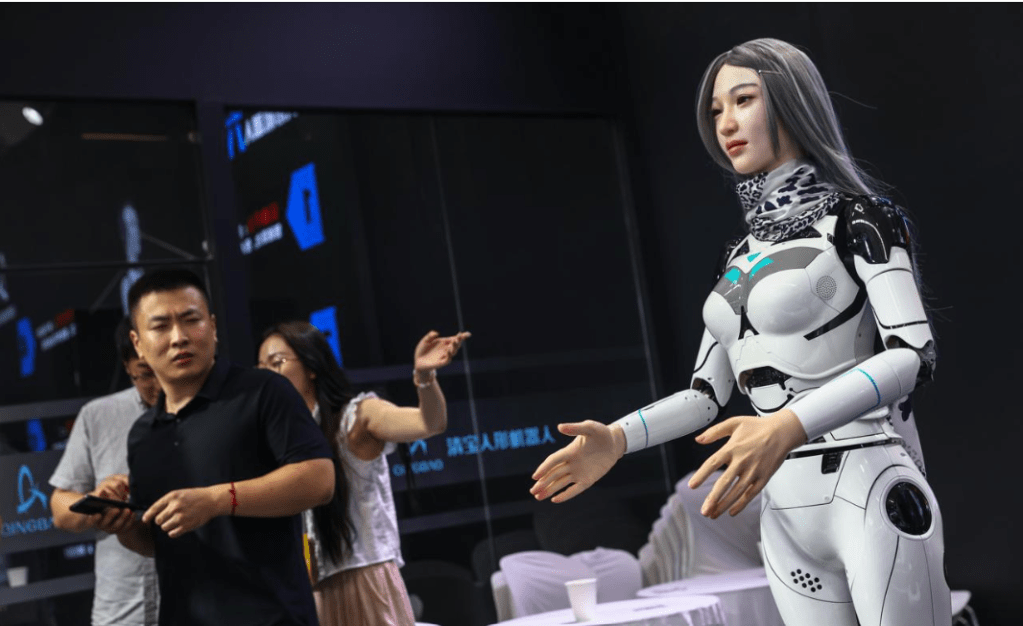
There are some very recent videos from China (I forget the company) selling humanoid robots that use silicon to create life-like robots that can be modeled after a picture supplied by the customer. Using voice cloning the robots also can match a voice supplied by the customer. The robots have autonomous AI that learns over time to interact appropriately with the customer and a whopping humungous memory. The company already has over 3K orders and says we aren’t too far from every home having such a robot. The price is approximately that of a new car. I find this very sci-fi.
Note: ChatGPT is a bit dated; a lot has happened in the last couple of months. In Part 2 tomorrow the AI catches up.
ChatGPT said:
Yes—and I think I may have found the story you’re remembering, although some of the details circulating in videos appear to have been combined or exaggerated.
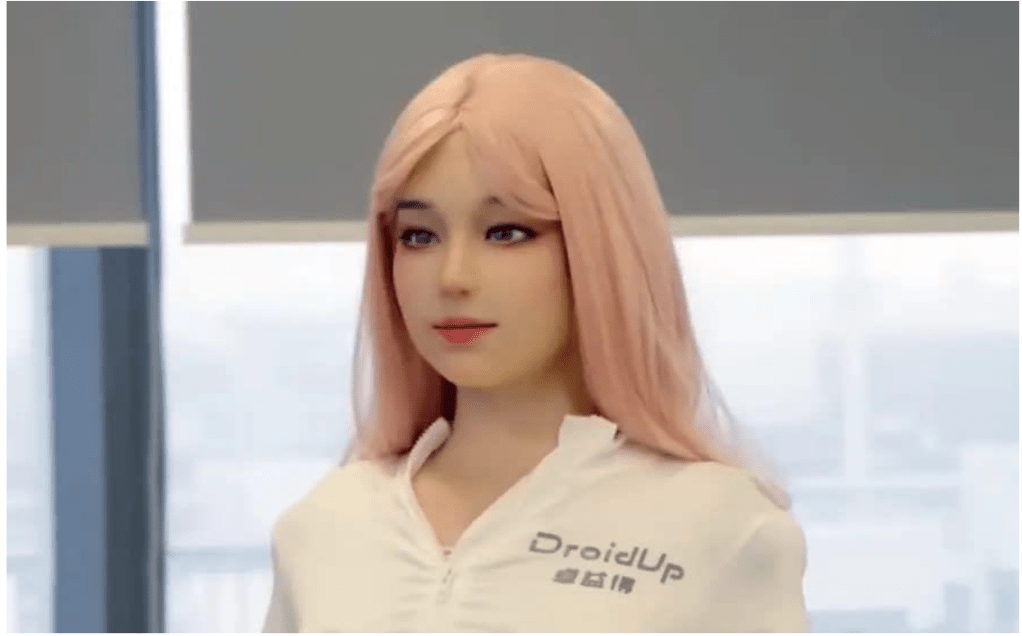
The company may be UBTECH Robotics and its U1, which has been described in recent reporting as a full-size, ultra-realistic humanoid intended for mass production. Reports describe cameras in the eyes, microphones, sensors, lifelike skin and AI conversation. There are also other Chinese companies pursuing extremely lifelike humanoids, including DroidUp, whose biomimetic robot debuted earlier this year.
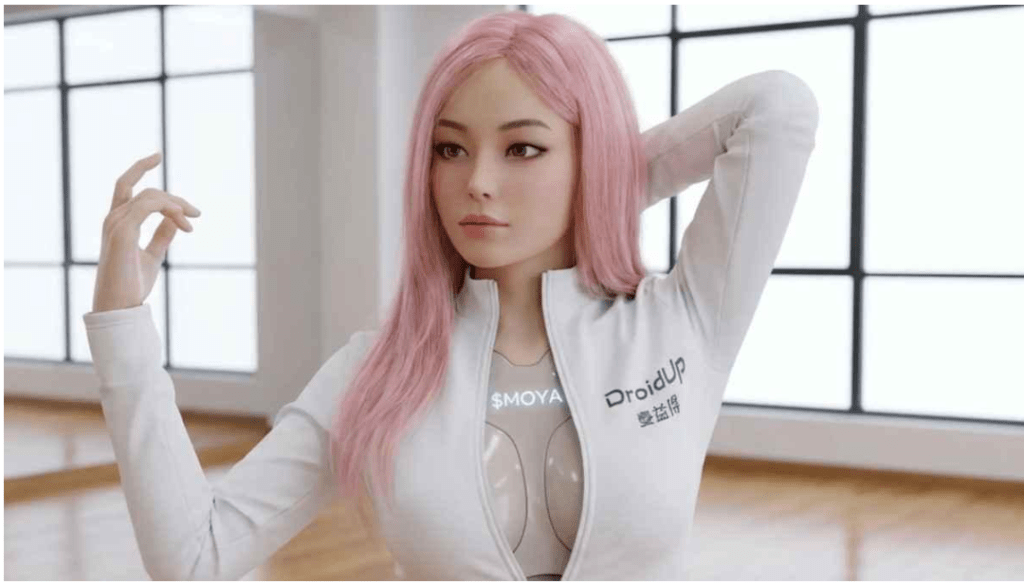
But I would put an asterisk beside some of the viral claims—particularly the precise claims about cloning any customer’s photograph and voice, enormous long-term memory, and thousands of orders for that particular customized companion. I haven’t yet found a strong primary or major-news source verifying that entire package.
Interestingly, there is a Chinese robot company with a verified “3,000” figure in the news this week: Chery’s AiMOGA has delivered more than 3,000 robots worldwide. Those are not, however, 3,000 custom human replicas; they include service robots used in commercial and public-safety applications.
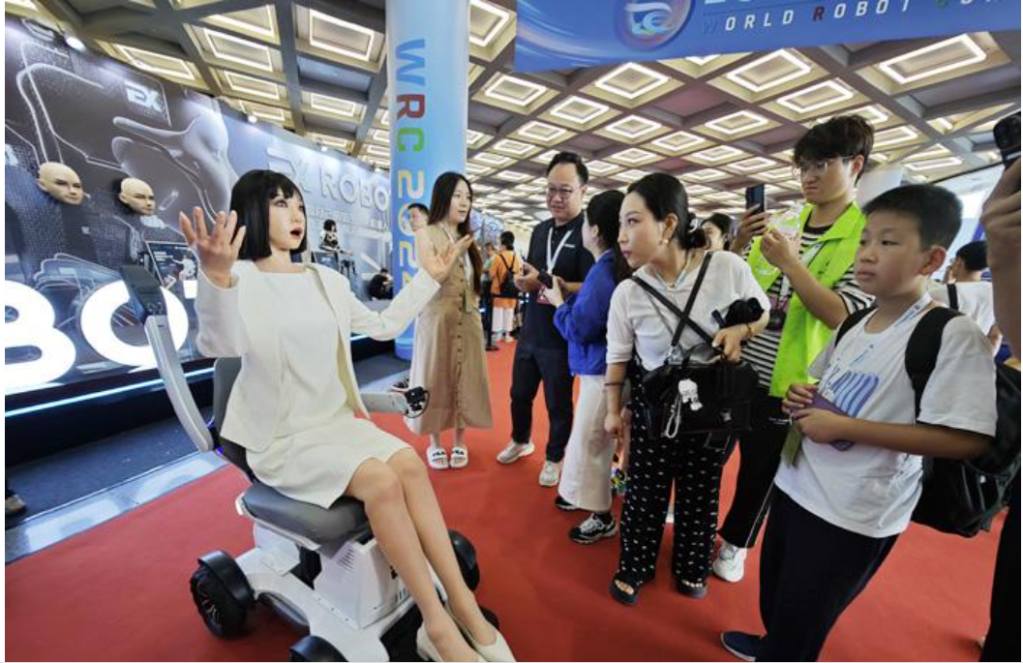
The broader phenomenon you’re reacting to is unquestionably real. At this week’s World Robot Conference in Beijing, around 3,000 robotic products were being shown, including humanoids intended for emotional support. AP reports lifelike models costing upwards of $24,000. And Unitree’s CEO said just three days ago that robotics is approaching its “ChatGPT moment”—although he thinks the breakthrough at which robots can reliably perform most unfamiliar physical tasks from ordinary verbal instructions could still be two to ten years away.
And that makes your observation much more interesting to me.
We have crossed a conceptual line
For decades, the science-fiction robot was basically:
body + computer + personality.
The real-world technologies developed separately:
humanoid robotics
- lifelike synthetic skin
- facial expression
- computer vision
- speech recognition
- natural conversation
- voice cloning
- long-term AI memory
- autonomous learning
None of those individually gives us the science-fiction robot.
But now somebody can start assembling the pieces.
And I think there’s a much stranger implication than having Rosie from The Jetsons clean the house.
Suppose Elaine were 30 years old today and accumulated thousands of hours of ordinary video and audio over the next fifty years. An AI could eventually have an extraordinary record of how Elaine speaks, what she knows, the stories she tells, her expressions, mannerisms, vocabulary, humor and ways of responding to you.
Combine that with a physical robot modeled on her appearance and a cloned voice.
Now we have wandered into territory that science fiction usually treated as philosophy rather than consumer electronics.
It wouldn’t be Elaine. That’s an enormously important distinction.
But your brain is exquisitely adapted to respond socially to a face, voice, gaze, touch, remembered experiences and familiar conversational patterns. If the machine possessed all of those, intellectually knowing “this isn’t a person” might not prevent your emotional machinery from treating it as one.
And imagine the reverse situation. A child grows up with a household robot from birth. It knows that child’s first words, illnesses, birthdays, fears, friends, school experiences and family stories. Forty years later the robot still remembers the afternoon when the six-year-old lost his first tooth.
The robot hasn’t merely learned about the family. It has a history with the family.
That seems to me more consequential than whether it can fold the laundry.
We have spent years debating whether AI could pass the Turing test. We may discover that ordinary human beings don’t actually require anything remotely so formal.
If something looks at us, remembers us, recognizes us, talks with us, helps us and appears pleased to see us when we walk through the door, a very ancient part of the human brain is going to say:
“Someone is home.”
That’s the part of this development that strikes me as genuinely science-fictional—and one for which I’m not sure society is remotely prepared.
I can keep an eye on this fast-moving humanoid-robot field and let you know when there are major developments, especially consumer/home robots.


Leave a Reply