
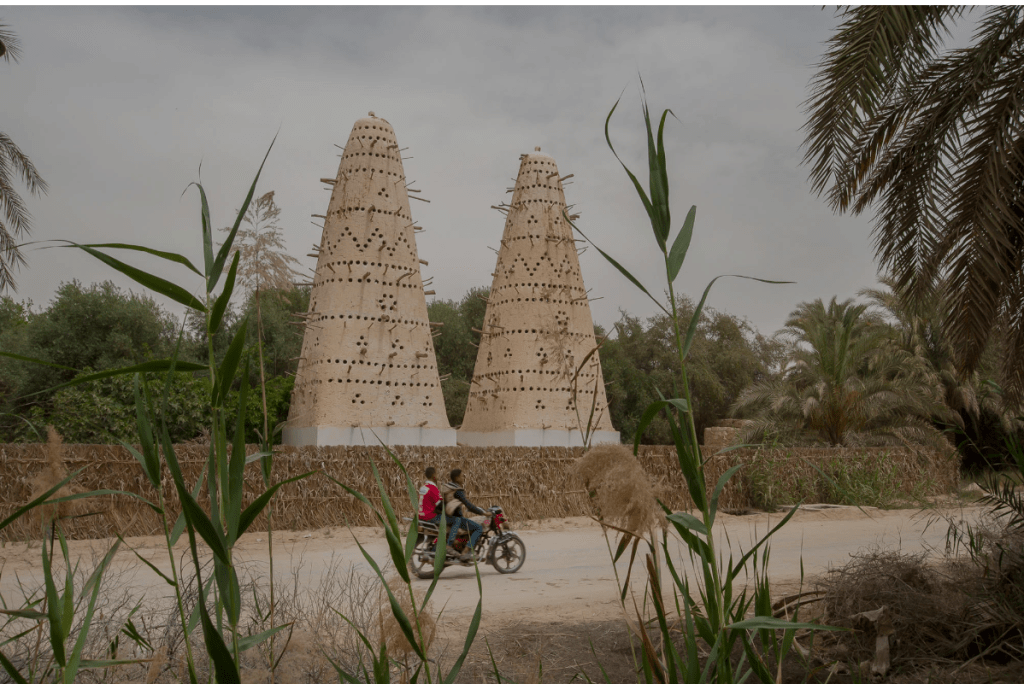
What are these two structures? I believe it is in Africa somewhere.
Note: The picture is copied from Book of the Month – John Wreford Photographer, a very interesting person who travels and takes photos where you have never been.
This is part of a series where I use AI to identify a variety of plants, animals, insects, rocks, diseases, et cetera, with the hopes of illustrating just how useful and interactive AI can be.
ChatGPT said:
These look very much like traditional pigeon towers (dovecotes), common in parts of North Africa and the Middle East, especially Egypt.
Why I think they’re pigeon towers
- Conical shape is characteristic of many traditional dovecotes.
- The hundreds of small round holes are entrance holes for pigeons.
- The wooden pegs sticking out provide perches for birds before they enter.
- They are built from mud brick or plastered earth, materials commonly used in hot, dry climates.
The pigeons served several purposes:
- Fertilizer: Pigeon droppings were a valuable, nitrogen-rich fertilizer for crops.
- Food: Squabs (young pigeons) were raised for meat.
- Occasionally communication: Though these large towers were primarily for breeding rather than housing messenger pigeons.
The surrounding date palms also fit well with an oasis environment, which points toward places like:
- Egypt (especially the Nile Valley or oases such as Fayoum or Siwa)
- Parts of Tunisia
- Morocco
- Less commonly, similar structures can be found elsewhere across North Africa.
I’m about 90–95% confident these are pigeon towers rather than beehives or grain silos. Beehives generally have much smaller openings and lack the external perches.


Leave a comment