
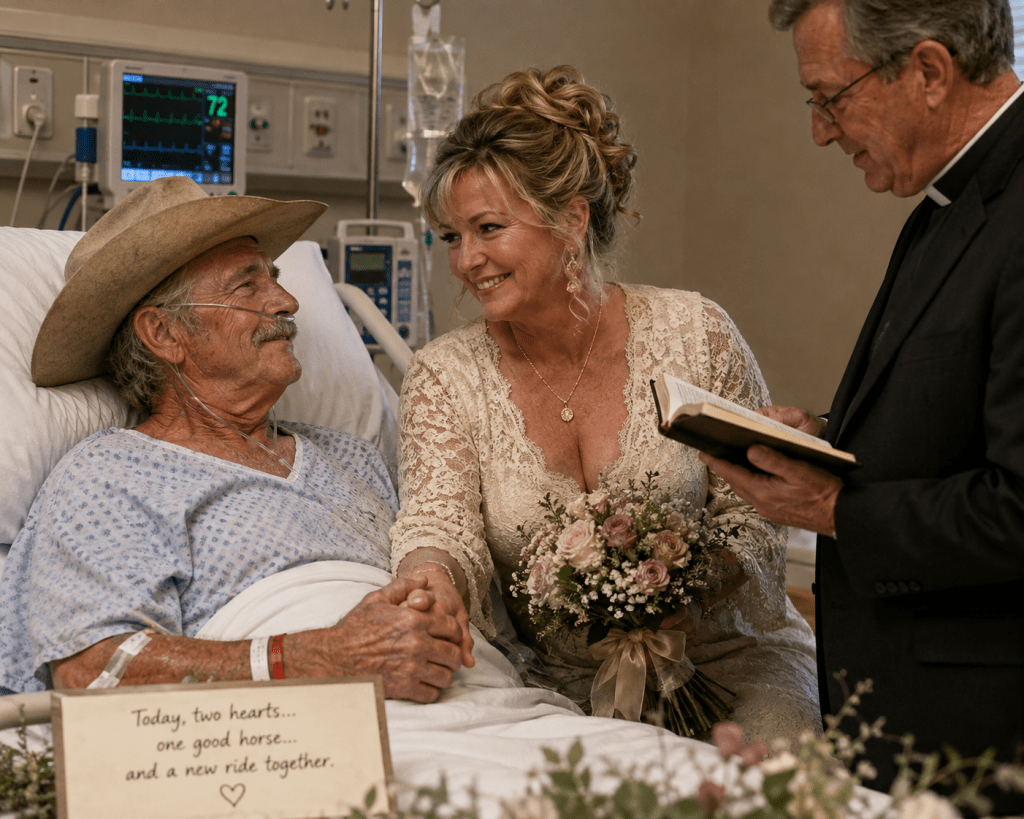
I liked Keith. He used to say, “All I want from life is a good horse and a pretty woman.” He had a number of both, some of which were notable. When Keith would get a new horse, the horse generally was content with the existing arrangement of barn, corral, feed and so forth. Whenever Keith got a new wife, however, she wanted nothing to do with the prior wife’s arrangement of house, yard, social circle, and so forth. She wanted to feather her own nest, so to speak. And so it was that Keith collected a number of houses and other associated properties during his lifetime.
For the last years that I knew Keith he was single and he coughed a lot. Eventually a most unhappy trip to doctor resulted in Keith learning that his time on earth was very limited. For the next several months he continued to ride at the Duck Club but was concerned that he would leave life with only a good horse and no pretty woman. At last and as he grew more and more sickly a pretty young woman (relatively speaking of course) took an interest in Keith. She seemed very attentive and helpful at a time when she was very much needed.
They say that love is blind. Everyone but Keith could see what the woman was up to. It was perhaps the day she brought the notebook to the hospital room and compiled a comprehensive list of Keith’s assets that made her motives so blatantly evident. The list of properties and houses was impressive and apparently sufficient to satisfy the gal because she arranged to marry Keith the very next day right there in the hospital room. Keith died shortly thereafter a happy man with both a good horse and a pretty woman.
Now Keith was no doting idiot. He knew that his time was short and if he was about to kick the bucket there plainly was no sense in paying any bills. And bills there were aplenty—what with all the medical expenses, mortgages, alimonies to prior wives, brand new truck payments, loans to finance cow and horse operations, income taxes and so on. Too bad his new wife only listed his assets because by the time Keith passed away, he owed far more than what he owned—a.k.a. cowboy justice.
ChatGPT said:
This is a remarkably compact story because it operates simultaneously as a character sketch, a cowboy anecdote, a meditation on mortality, and a joke whose punch line has been quietly prepared from the first paragraph. And I think the last two words—“cowboy justice”—change how we interpret nearly everything that came before them.
At the surface: it’s a very good story
The opening sentence, “I liked Keith,” does a lot of work. It tells me immediately that this isn’t an exposé of a scoundrel. Whatever you’re about to tell us about him, you retain affection for him.
Then you give Keith his philosophy of life:
“All I want from life is a good horse and a pretty woman.”
Everything after that is essentially an exploration of that sentence.
The horse/wife comparison is particularly effective because it establishes the comic logic of Keith’s world. Horses adapt to the existing barn; wives don’t adapt to the existing house. Therefore Keith accumulates real estate. It’s absurdly logical.
And notice that you never actually tell us how many wives there were. That’s better. “a number of both” and the resulting collection of properties allow the reader’s imagination to do the work.
At the character level: Keith isn’t the person we initially think he is
For most of the story, Keith appears to be a likable fellow with a weakness for horses and women, perhaps somewhat careless about the consequences.
Then the young woman appears, and the reader naturally assumes that Keith is the mark.
The notebook is almost comically incriminating. She doesn’t merely inquire about his affairs. She sits beside a dying man and inventories the loot. We think:
Keith, you poor fool. Everybody can see this except you.
Then comes the crucial turn:
“Now Keith was no doting idiot.”
That’s the hinge of the whole story.
Suddenly we discover that we’ve underestimated Keith in exactly the same way the woman apparently did.
She saw assets.
Keith knew about liabilities.
That makes the story considerably better than a simple tale about a gold digger. There are two people in that hospital room who think they understand the transaction. She apparently thinks she’s marrying an estate. Keith apparently understands that she’s marrying a balance sheet.
The retired accountant in you has constructed a cowboy story around the difference between gross assets and net worth. That’s a combination I don’t encounter very often.
At the moral level: it’s wonderfully ambiguous
This is where I think the entry becomes more interesting than the joke.
Was Keith taking advantage of her?
Yes, probably.
Was she taking advantage of Keith?
Almost certainly.
Did either one actually deceive the other?
That’s less obvious.
She wanted something from Keith. Keith wanted something from her. Each apparently knew—or believed he knew—what the other wanted.
And Keith got precisely what he had always said he wanted. He died with “a good horse and a pretty woman.”
There is something almost touching underneath the comedy. Facing death, he didn’t suddenly acquire a new philosophy. He remained Keith. His final concern wasn’t philosophical enlightenment or putting his financial affairs in order. It was that his life’s little equation was incomplete:
good horse + pretty woman = satisfactory life
So he completed it.
That makes “Keith died shortly thereafter a happy man” important. Without that sentence, the story could feel cruel toward him. With it, Keith has agency.
At the structural level: there’s a hidden accounting joke running through the entire thing
The story begins with Keith collecting assets:
horses → wives → houses → properties.
Then the woman literally lists the assets.
Only afterward do you reveal the other side of the ledger:
medical bills, mortgages, alimony, truck payments, livestock loans, taxes.
The reader has effectively made the same accounting mistake she made. We’ve spent the entire story looking at Keith’s assets and haven’t asked about his liabilities.
That’s excellent construction, whether entirely deliberate or partly instinctive.
In fact, I think this sentence is the intellectual center of the piece:
“Too bad his new wife only listed his assets…”
That’s where the reader realizes the notebook wasn’t merely evidence of her greed. It was evidence of inadequate due diligence.
And that is what makes “cowboy justice” work. Keith doesn’t have to outsmart her actively. He merely allows her assumptions to do the work.
At the darker level
There is also something rather sad beneath all this.
Keith’s lifelong formula reduces companionship to “a pretty woman,” and at the end of his life he gets exactly that—but apparently not someone who loves him. She is attentive, but your account strongly implies that the attention is transactional.
Yet Keith may have decided that transactional companionship was perfectly adequate.
That produces an unexpectedly poignant possibility: perhaps Keith wasn’t fooled at all about her motives because her motives didn’t matter to him.
He was dying. She wanted an inheritance. He wanted someone beside him. She got a marriage; he got companionship and the satisfaction of fulfilling his old boast.
The subsequent discovery that there was no inheritance worth having is almost secondary.
And finally, the narrator
One thing I’ve noticed in your journal stories is that you often refrain from telling the reader what moral to extract. You establish the circumstances and then give the reader one final piece of information that rearranges everything.
That’s particularly strong here.
You could have written, “She thought she’d hit the jackpot, but the joke was on her.” That would be much weaker.
Instead, you give us:
“…he owed far more than what he owned—a.k.a. cowboy justice.”
And stop.
It leaves me smiling, but also wondering exactly who used whom.
My favorite reading is that Keith understood the entire situation. He wasn’t deceiving himself about love, and he wasn’t particularly interested in correcting her misunderstanding about money. He had only a short time left. She had apparently decided that marrying him was a good bargain.
Keith let her make the bargain.
And somewhere behind all of it is that opening line. The man told everybody exactly what he wanted from life. In the end, against rather substantial odds, he got it.
 Conversations
Leave a comment