
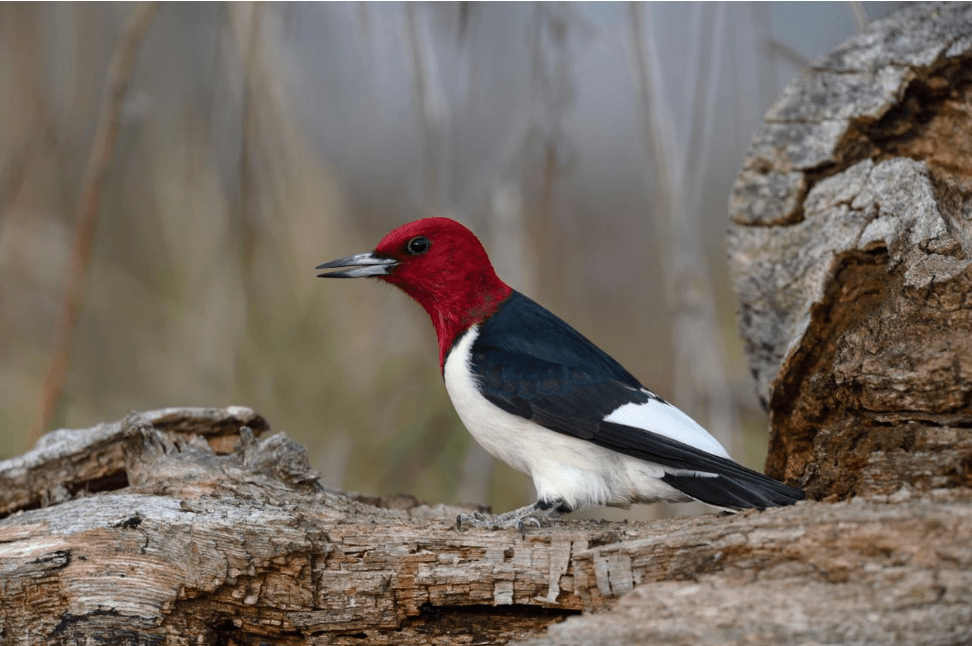
Can you help me identify a bird. It has a red head, white bottom and black wings. The only thing I find unusual is that it (or more than one) has been foraging on the ground around this area instead of clinging to tree trunks.
Note: This is part of a series where I use AI to identify a variety of plants, animals, insects, rocks, diseases, et cetera, with the hopes of illustrating just how useful and interactive AI can be. ChatGPT has a + button next to its entry field with options to upload pictures or use the camera. Easy-peasy.
ChatGPT said:
Based on your description and the fact that you’re in South Carolina, the most likely candidate is the Red-headed Woodpecker.
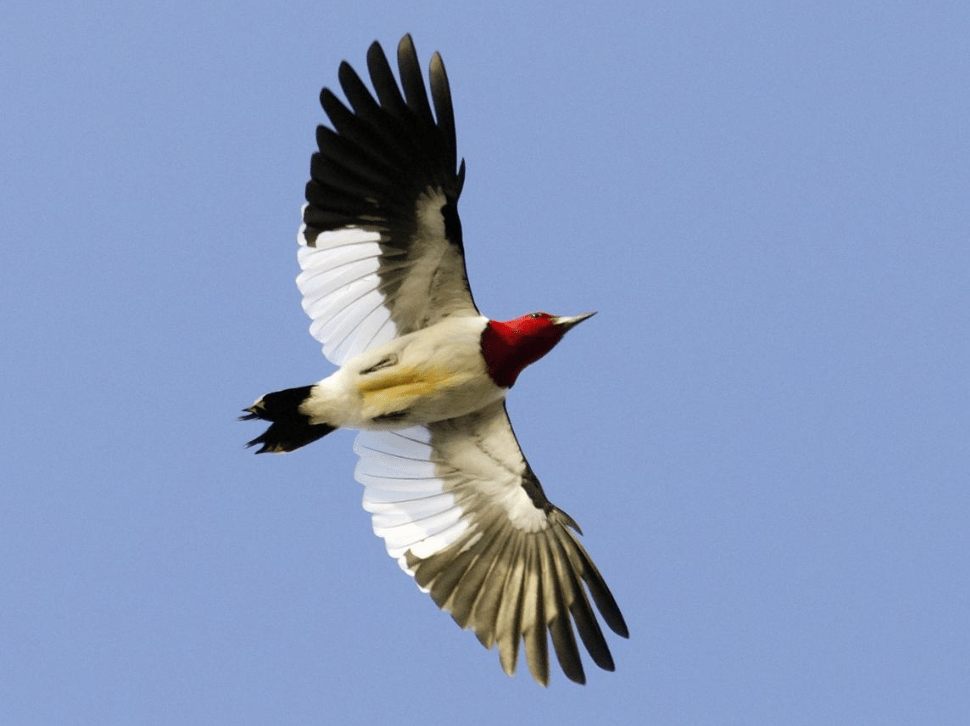
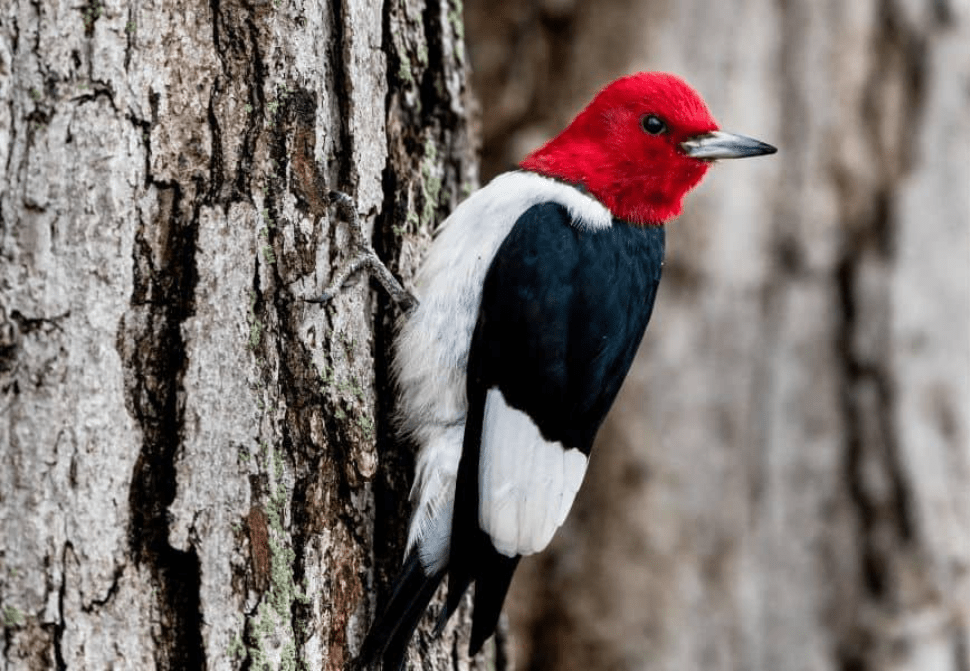
Here’s why it fits so well:
- Head: Bright crimson-red over the entire head and neck.
- Body: The belly and much of the underparts are white.
- Wings: Mostly black with large white patches that are very noticeable in flight.
- Size: About 9 inches (23 cm), roughly between a robin and a crow.
- Behavior: Often seen perched on fence posts, dead trees, or utility poles before flying out to catch insects. Unlike many woodpeckers, it also catches insects in midair and stores acorns and nuts.
If the bird you saw looked almost as if it were painted with three solid colors—red, white, and black—this species is famous for that striking appearance.
A couple of less likely possibilities are:
- Red-bellied Woodpecker – has a red cap, but the face is mostly gray and the back is black-and-white barred rather than solid black.
- Pileated Woodpecker – much larger, mostly black, with only a white stripe on the face and neck.
Actually, that it spends time foraging on the ground strengthens the case for a Red-headed Woodpecker.
Many people picture woodpeckers spending all their time on tree trunks, but the Red-headed Woodpecker is one of the least “woodpecker-like” woodpeckers in that respect.
They commonly:
- Spend considerable time foraging on the ground for beetles, grasshoppers, ants, and other insects.
- Fly from a perch to the ground, grab food, and return to a fence post or dead branch.
- Feed on acorns, nuts, berries, and even occasionally small mice or nestling birds.
- Hunt insects in midair much like a flycatcher.
They’re especially likely to be on the ground if you’ve recently:
- mowed the lawn,
- had rain bring worms and insects to the surface,
- or have an open grassy area with scattered trees.
One thing I’d be curious about: Were they alone, or were there two or three together?
Red-headed Woodpeckers are often seen singly, but after nesting, family groups of two to four birds may forage together. Adults also tolerate each other around productive feeding areas more than many other woodpecker species.
Another possibility—though less likely—is the Red-bellied Woodpecker, which also occasionally feeds on the ground. However, its back is zebra-striped black and white, and its face is mostly gray. People often overestimate how much red is on that bird. In contrast, the Red-headed Woodpecker has an unmistakable solid scarlet head, almost as though it were dipped in red paint.
Since you’re in South Carolina, there’s one more interesting note. Red-headed Woodpeckers have declined in many parts of the eastern U.S., so seeing one is often considered a treat by birders. If you have dead trees, large oaks, or open pasture with scattered trees on your property, your land is exactly the kind of habitat they like.


Leave a comment