
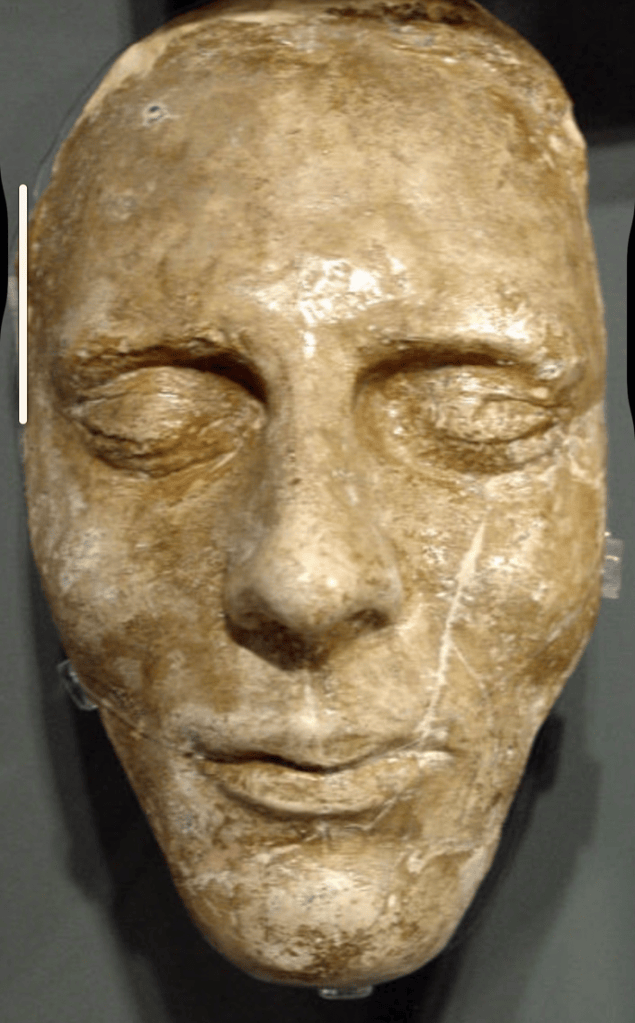
Can you create a good life image based on this death mask?
Note: I purposefully did not identify who the mask belonged to or any other known details of Joseph Smith’s appearance, such as hair and eye color.
My understanding from the accounts of people who knew him was that Joseph was strikingly charismatic, a quality I find quite missing in most images trying to recreate his face. AI in this instance produced a face with what I would call, charisma.
ChatGPT said:
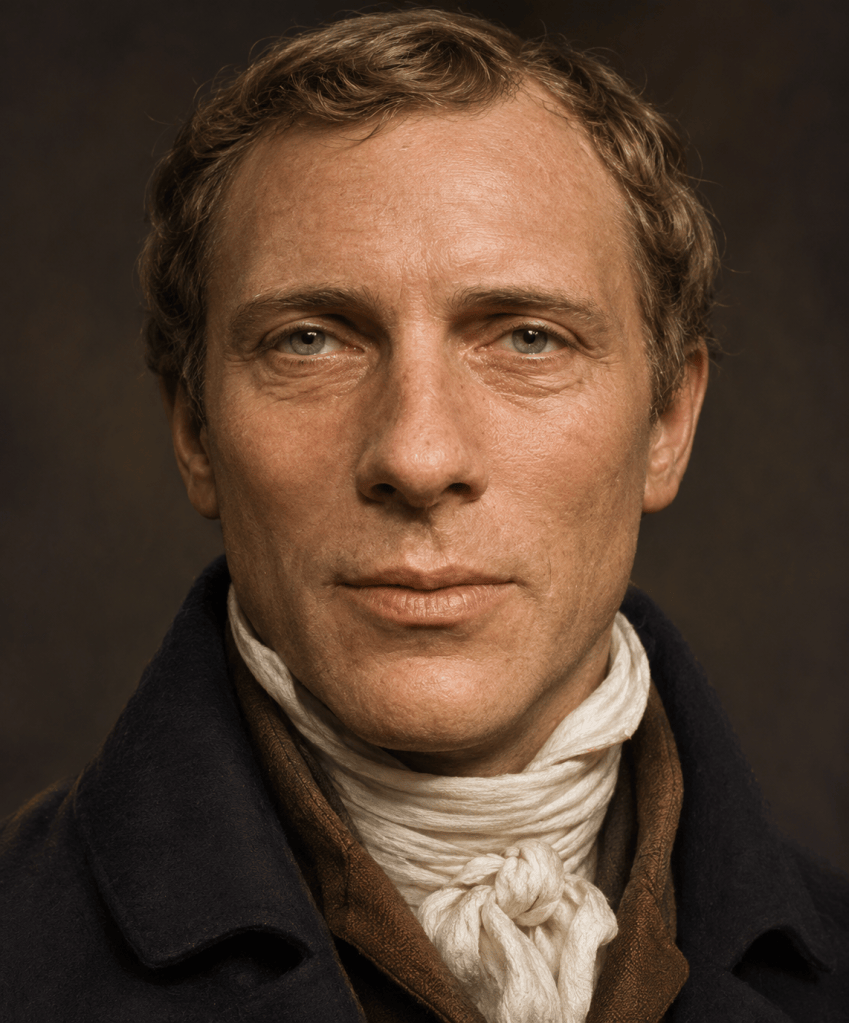
Please explain how you came to this.
ChatGPT said:
I approached this as a facial reconstruction rather than a conventional historical portrait, using the death mask as the primary visual reference. I wanted to reproduce the individual rather than idealize him.
There were two principal considerations: what the death mask actually tells us about the man’s appearance and what changes would occur between death and life.
1. Features derived from the death mask
Original death mask
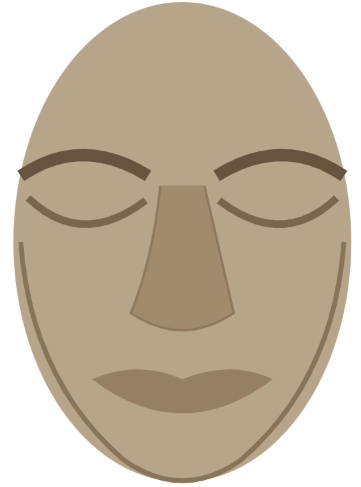
Principal facial proportions
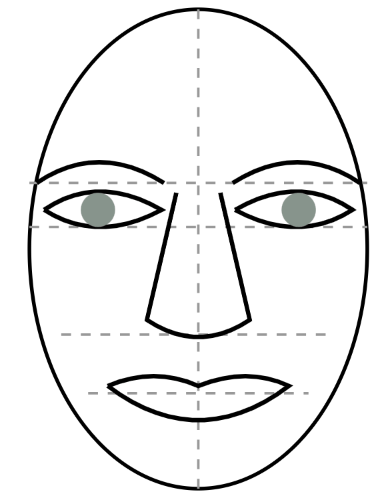
Illustrative schematics of facial structure, not measured anatomical tracings.
I paid particular attention to the following characteristics:
| Facial feature | Interpretation of the mask |
|---|---|
| Forehead | High, broad and relatively smooth |
| Eyebrows | Pronounced brow ridges with a slight arch |
| Eyes | Relatively deep-set, with substantial lower eyelids |
| Nose | Long, fairly straight bridge with a rounded, projecting tip |
| Cheekbones | Broad upper facial structure |
| Mouth | Moderately wide, with a thinner upper lip and fuller lower lip |
| Jaw | Gradually narrowing from the cheeks toward the chin |
| Chin | Substantial, rounded and slightly projecting |
| Symmetry | Minor natural differences between the two sides of the face |
Collectively, these characteristics give the face much of its individuality.
2. Accounting for the effects of death
A death mask is not necessarily an exact representation of a person in repose during life.
Several things can change after death:
- Facial muscles lose their normal resting tension.
- The cheeks and tissues around the eyes may change shape.
- The lips may compress or settle into an unnatural position.
- Gravity can redistribute soft facial tissue.
- The molding process itself can slightly distort softer features.
The reconstruction attempted to restore normal muscular tension, open the eyes, restore natural skin texture and give the cheeks the appearance of living tissue.
I deliberately avoided a broad smile because that would introduce considerable changes to the facial geometry.
3. Features that required speculation
The death mask cannot reliably tell us everything about the living individual.
| Feature | Confidence from the mask |
|---|---|
| Overall facial proportions | Relatively high |
| Nose and chin structure | Relatively high |
| Lip shape | Moderate |
| Appearance of open eyes | Moderate to low |
| Hairline and hairstyle | Low |
| Skin complexion | Low |
| Eye color | Not determinable |
| Hair color | Not determinable |
I selected light brown hair, gray-green eyes, a clean-shaven face and early nineteenth-century clothing. These were interpretive decisions, not independently verified historical findings.
4. How the AI accomplished the reconstruction
Unlike a forensic artist, the AI did not need to manually draw each facial feature. Its training has exposed it to patterns in human faces, photographs, sculptures, portraits and other visual representations.
That enables it to associate the three-dimensional appearance of a plaster cast with the probable appearance of living human anatomy.
However, I did not perform a calibrated three-dimensional scan, take anatomical measurements or consult historical descriptions before generating the portrait. The image is a visually guided reconstruction, not a scientifically validated forensic reconstruction.
5. How accurate might it be?
I would expect the general facial structure to be more reliable than the finer details. The greatest uncertainties are the eyes, the fullness of the cheeks and the appearance of the mouth during life.
An interesting experiment would be to generate several independent reconstructions from this same death mask, without telling the AI whose mask it is. We could then compare the resulting faces to determine which characteristics consistently emerge and which are products of artistic interpretation.
That would help distinguish what the AI is actually extracting from the death mask from what it is supplying through its general knowledge of human appearance.


Leave a Reply