
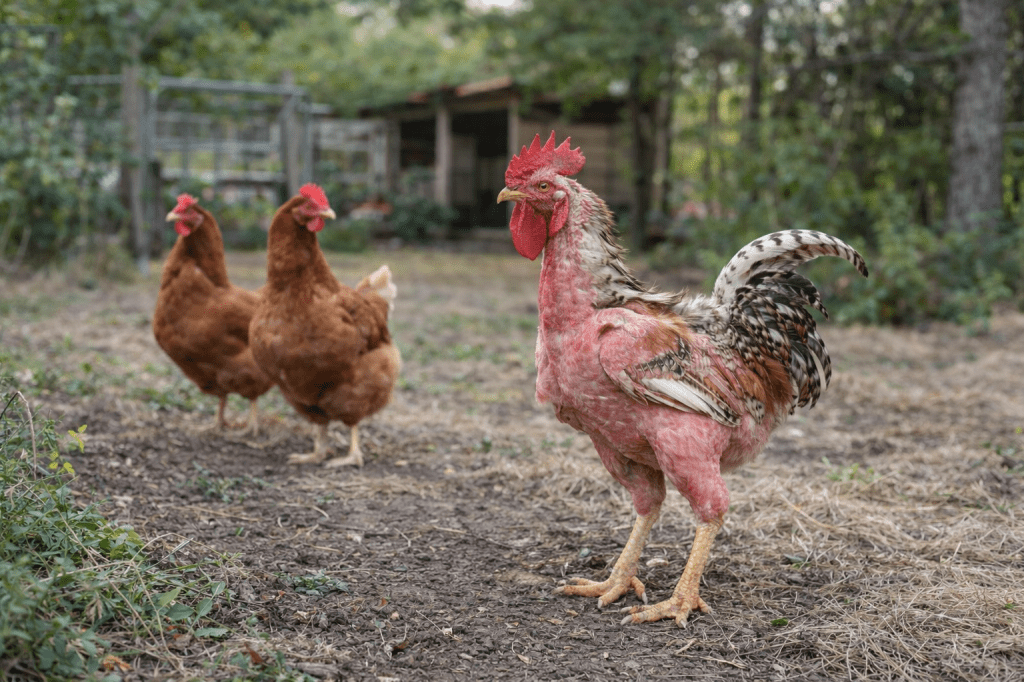
My chickens molt from time to time but recently my rooster has started molting aggressively. Typically, all the chickens molt at the same time but now it is only the rooster. Does anyone know, is this normal?
He lost a LOT overnight. When he had more feathers, I regularly dusted him with diatomaceous earth. He has always had plenty of clean water. Should I increase protein? Add electrolytes? I’m concerned.
I really don’t want to lose this rooster. Unlike all the other roosters I’ve owned, this one has never attacked me.
Note. Here’s what AI said about chicken molt. I think I’m already following its advice, but my rooster’s molt seems extreme to me and ChatGPT has never owned a chicken, so what does it actually know? I’m looking for some real-world help here.
ChatGPT said:
The Molting Process
What is Molting?: Molting is the shedding of old, worn-out feathers to make way for new, healthy ones. This process is essential for maintaining the chicken’s insulation and overall health.
Triggers: The primary trigger for molting is a change in daylight hours. This change signals the chickens’ bodies to start the molting process, which can also lead to a temporary halt in egg production as their reproductive systems regress.
Duration: The molting process can last anywhere from 4 to 12 weeks, depending on the individual chicken and the type of molt (hard or soft). A hard molt is more dramatic and occurs quickly, while a soft molt is gradual and less noticeable.
Effects on Chickens
Physical Changes: During molting, chickens may appear scruffy or bald in certain areas as they lose feathers. This can make them look less attractive, but it is a normal part of their life cycle.
Behavioral Changes: Chickens may become less social and more irritable during this time due to discomfort from new feather growth. It’s important to handle them gently, as new feather shafts are sensitive.
Care During Molting
Nutrition: Providing a high-protein diet is crucial during molting, as feathers are primarily made of protein. Supplementing their regular feed with high-protein foods can help support feather regrowth.
Comfort: Ensure that molting chickens are comfortable and stress-free. Avoid handling them too much, and monitor for any signs of bullying from other flock members, as exposed skin can make them targets.
Environment: Keep their living conditions clean and dry to prevent any health issues during this vulnerable time.
Conclusion
Molting is a natural and necessary process for chickens, allowing them to replace old feathers with new ones for better insulation and protection. Understanding this process helps chicken owners provide the best care during this time, ensuring their flock remains healthy and comfortable.
 Conversations
Leave a comment