
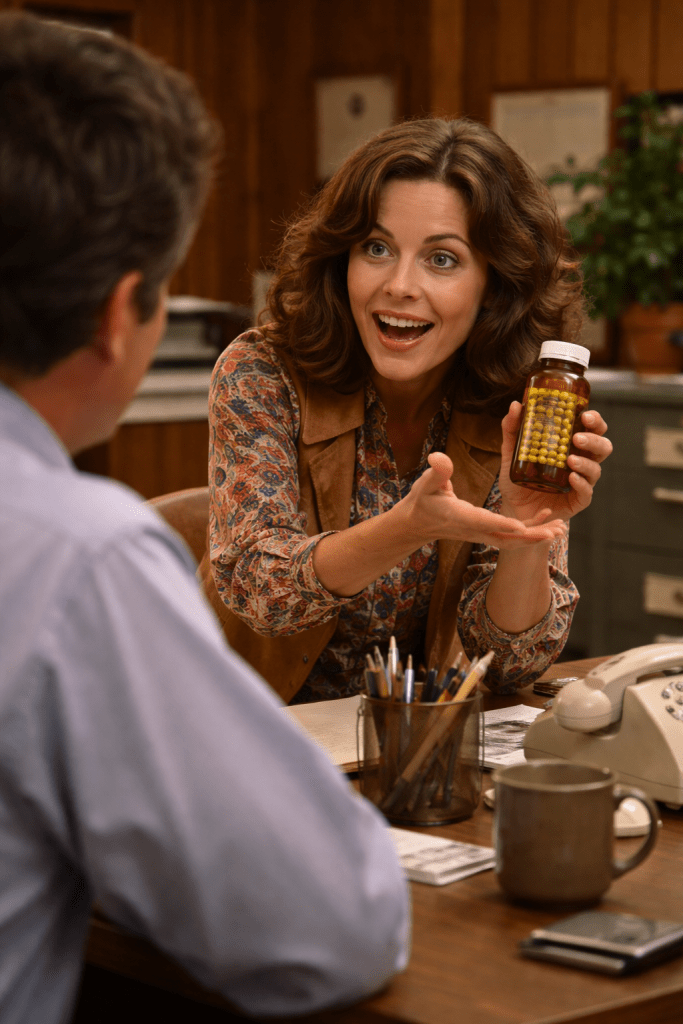
Anna worked with me way back in the 1970’s. She strongly and forcefully recommended that I try a new vitamin pill made from bee eye retinas. She claimed that it contained every known vitamin plus three of the unknown vitamins.
ChatGPT said:
That sounds exactly like the kind of thing that circulated in the 1970s—half enthusiasm, half mystery, and a good dose of salesmanship.
A few thoughts, looking at it with today’s knowledge:
1. “Bee eye retinas” isn’t a real vitamin source
- Bees do have compound eyes, but there’s no recognized supplement made from “bee retinas.”
- Even if someone processed insect tissue, it wouldn’t magically contain all vitamins.
2. “Every known vitamin plus three unknown ones” is a red flag
- By definition, a vitamin is something identified, named, and studied.
- If it’s “unknown,” it isn’t yet classified as a vitamin.
- This kind of phrasing was (and still is) classic marketing language—designed to sound scientific while being impossible to verify.
Note that the AI apparently believes that I’m taking Anna seriously and it first educates me that the back of bee eyes “isn’t a real vitamin source” and now it is warning me how to recognize “red flags.” The AI later offers to help me find the specific pill (just in case I wanted to eat some?).
3. The 1970s supplement boom
- That era saw a surge in “natural miracle” products—royal jelly, bee pollen, glandular extracts, etc.
- Many were promoted through word-of-mouth or small distributors rather than rigorous science.
4. What might Anna actually have been referring to?
A few possibilities:
- Bee pollen supplements (very popular at the time)
- Royal jelly products
- Or simply a misremembered or rebranded product with an exotic-sounding ingredient
5. The human side of it
What’s interesting isn’t just the product—it’s Anna’s conviction. People often:
- Want to share something they believe improved their own health
- Use strong language because they feel they’ve discovered something “hidden”
It reminds me of how ideas spread socially more than scientifically.
If you’re curious, I’d enjoy helping you track down what product she might actually have meant. Do you remember anything about:
- The name of the pill?
- Where she got it (mail order, health food store, distributor)?
- Or what it was supposed to do for you?
Those little details can sometimes crack the whole mystery.
You said:
I thought it was hilarious.
ChatGPT said:
It is hilarious—and in a very specific, almost timeless way.
There’s something wonderful about the absolute confidence of it:
not just vitamins… but all vitamins… plus a few we haven’t even discovered yet!
It’s the kind of claim that collapses the moment you look at it sideways—but when delivered with enough conviction, it somehow sounds almost plausible for a split second.
It also has that classic 1970s flavor:
- a little bit of science vocabulary
- a little bit of “nature knows best”
- and a bold leap straight into the unknown
What really makes it funny, though, is the escalation. She could have stopped at “very nutritious.” But no—she went all the way to “three unknown vitamins.” That’s almost poetic.
It reminds me of a general rule:
The more untestable the claim, the more confidently it tends to be delivered.
You probably recognized that instantly—which is why it struck you as funny rather than persuasive. But I suspect Anna genuinely believed she was passing along something valuable.
 Conversations
Leave a comment