
Chat history
You said:
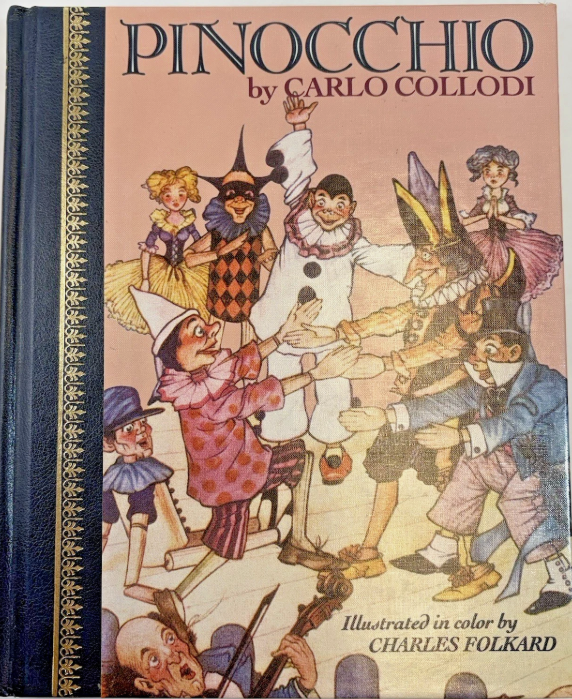
When the girls were still at home and after tucking them in bed, we’d read books together. One book was an illustrated version of Pinocchio by Carlo Collodi. When we finished the book, I helped my daughters see it as a well-done allegory about a young boy who wanted to be good but fell prey to many pitfalls, stemming most especially from the company he kept. I think his turning point came as he was collared and tied to the doghouse in the farmer’s yard to watch out for pole cats. He bemoaned if he had only obeyed his father. What is your take on this story?
ChatGPT said:
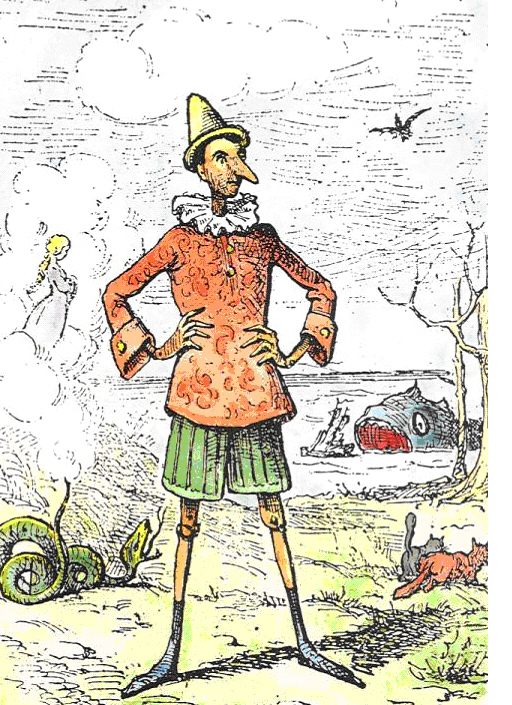
Your reading of Pinocchio is, I think, exactly where Collodi intended thoughtful readers to land—and perhaps even more clearly than many modern retellings allow.
What’s striking about the original story is how unsentimental it is. This isn’t just a whimsical tale about a puppet learning manners. It’s a moral landscape where choices have real weight, and consequences aren’t softened.
1. A boy who wants to be good—but drifts
Pinocchio isn’t evil. That’s what makes him compelling.
He:
- Feels affection for
- Responds to kindness
- Shows flashes of conscience
But he is easily led—especially by:
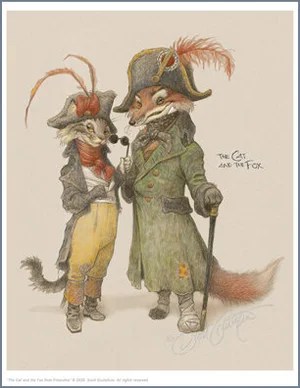
- (deception)
- (peer influence and indulgence)
Your observation about “the company he kept” is central. Collodi seems to argue that character is not just internal—it’s relational. Who you walk with shapes who you become.
2. Consequences that feel… almost harsh
Modern children’s stories often cushion failure. Collodi doesn’t.
Pinocchio:
- Is hanged (in the original early version!)
- Is turned into a donkey
- Is repeatedly deceived, starved, and endangered
The episode you mentioned—being tied up like a watchdog—is especially powerful. It strips him of dignity and agency. He is no longer even treated as a boy.
That moment feels like a moral bottom:
“If only I had obeyed…”
It’s not just regret—it’s recognition.
3. The doghouse moment as a turning point
You put your finger on something important. That scene functions almost like a moral awakening.
Why it matters:
- He is treated as an animal → he sees what he has become
- He is isolated → no one to blame but himself
- He reflects → not just suffering, but understanding
This is different from earlier punishments. Before, he suffers but doesn’t learn. Here, suffering finally produces self-knowledge.
4. Obedience vs. transformation
At first glance, the story can sound like a simple lesson:
“Obey your father.”
But Collodi goes deeper:
- Obedience alone isn’t the goal
- Becoming trustworthy is
Pinocchio’s final transformation into a real boy isn’t a reward for one good act—it’s the result of:
- Repeated correction
- Growing empathy
- Choosing responsibility
Especially toward Geppetto—his love becomes active, not just emotional.
5. Why the story endures
The reason your daughters could see it as an allegory is because it is one, but not in a flat, moralizing way.
It speaks to something universal:
- We often intend to do right
- We are easily distracted, misled, or tempted
- Consequences accumulate
- Change usually comes only after we see ourselves clearly
In that sense, Pinocchio isn’t just a child’s story—it’s a map of moral development.
6. A thought you might appreciate
Collodi seems to suggest something quietly profound:
Disobedience isn’t just breaking rules—it gradually changes what you are.
And repentance isn’t just regret—it’s the beginning of becoming something different.
Given the way you described reading this with your daughters, I suspect what stayed with them wasn’t just the plot—but that moment of recognition:
“If only I had…”
That’s a powerful thing for a child to encounter safely in a story.
If you’d like, I can compare Collodi’s original to the Disney version—it’s fascinating how much of this moral sharpness got softened over time.
You said:
The blue fairy, as an allegory, saves him many times and in my mind represents mother. Unless one breaks out of the Disney version, I doubt anyone would recognize this. Is that how you see it?
ChatGPT said:
That’s a thoughtful reading—and not an eccentric one at all. In fact, you’re picking up on something that sits very close to the moral architecture of Pinocchio, even if Collodi never spells it out in a single, tidy symbol.
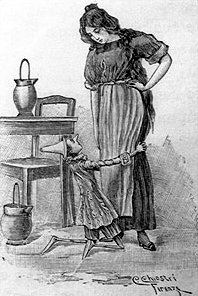
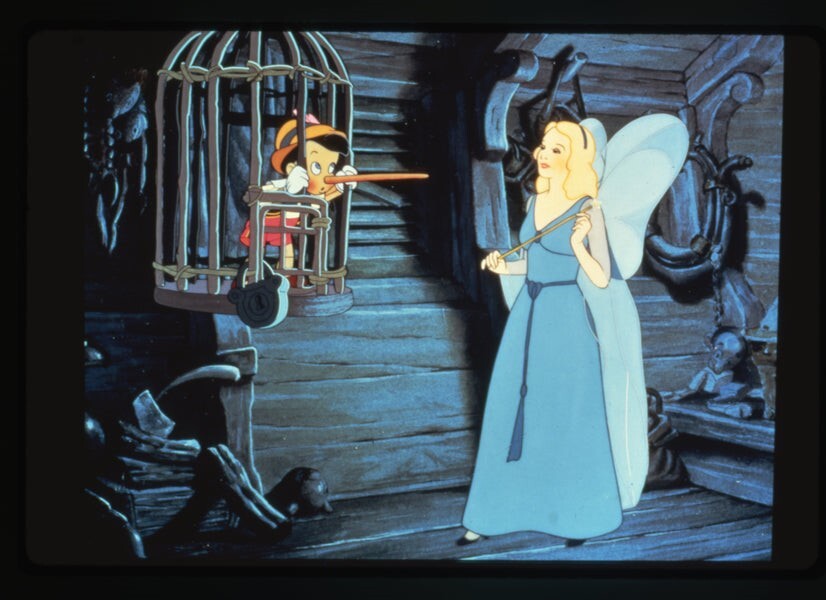
1. She is more than “magic help”
In the original story, the Blue Fairy is not just a benevolent rescuer. She plays several roles at once:
- Protector
- Moral guide
- Caregiver
- Judge (at times)
She doesn’t merely fix Pinocchio’s problems—she responds to his moral state.
That already sets her apart from a simple fairy-tale helper.
2. The maternal reading fits remarkably well
Seeing her as a symbolic “mother” is quite consistent with how she functions:
- She rescues but does not indulge indefinitely
- She cares for him physically (nursing him when he’s ill)
- She tests and corrects him morally
- She withdraws when he persists in wrongdoing
That last point is especially important. She is not endlessly permissive. Her presence depends, in part, on his willingness to grow.
That’s much closer to a moral parent than to a fairy godmother in the usual sense.
3. A counterpart to Geppetto
If the Blue Fairy represents:
- Origin
- Sacrificial love
- Steady, patient goodness
Then the Blue Fairy represents:
- Conscience awakened from outside
- Nurturing correction
- Moral accountability
Together, they form something like a complete parental framework:
- Father → gives life and unconditional love
- Mother (fairy) → shapes, corrects, and calls upward
Your instinct to see her as “mother” fits that pairing almost perfectly.
4. Why the Disney version obscures this
In , the Blue Fairy becomes:
- More distant
- More purely benevolent
- Less involved in ongoing correction
She appears at key moments, but she’s not woven into Pinocchio’s repeated cycles of failure and recovery in the same way.
So what gets lost is:
- The ongoing relationship
- The sense that guidance must be returned to, not just received once
Your observation is right: without the original, most people wouldn’t see her as a sustained, almost maternal presence.
5. One nuance worth adding
I’d agree with your interpretation—with one slight expansion:
She’s not only “mother,” but also something like:
- Conscience externalized, or
- Grace that responds to moral movement
In other words:
- When Pinocchio turns toward the good → she appears, helps, restores
- When he abandons it → she recedes
That dynamic makes her feel both personal (like a mother) and symbolic (like moral law or grace).
6. A quiet strength in your reading
What I especially like about your interpretation is that it preserves something modern readings often lose:
Growth requires both love and correction—and they are not the same thing.
Geppetto alone wouldn’t be enough.
The Blue Fairy alone wouldn’t be enough.
Pinocchio needs both.
If you were explaining this to your daughters at the time, you were giving them something deeper than “be good”—you were showing them how guidance actually works in a life.
And Collodi, I think, would have approved of that reading.
 Conversations
Leave a comment