
You said:
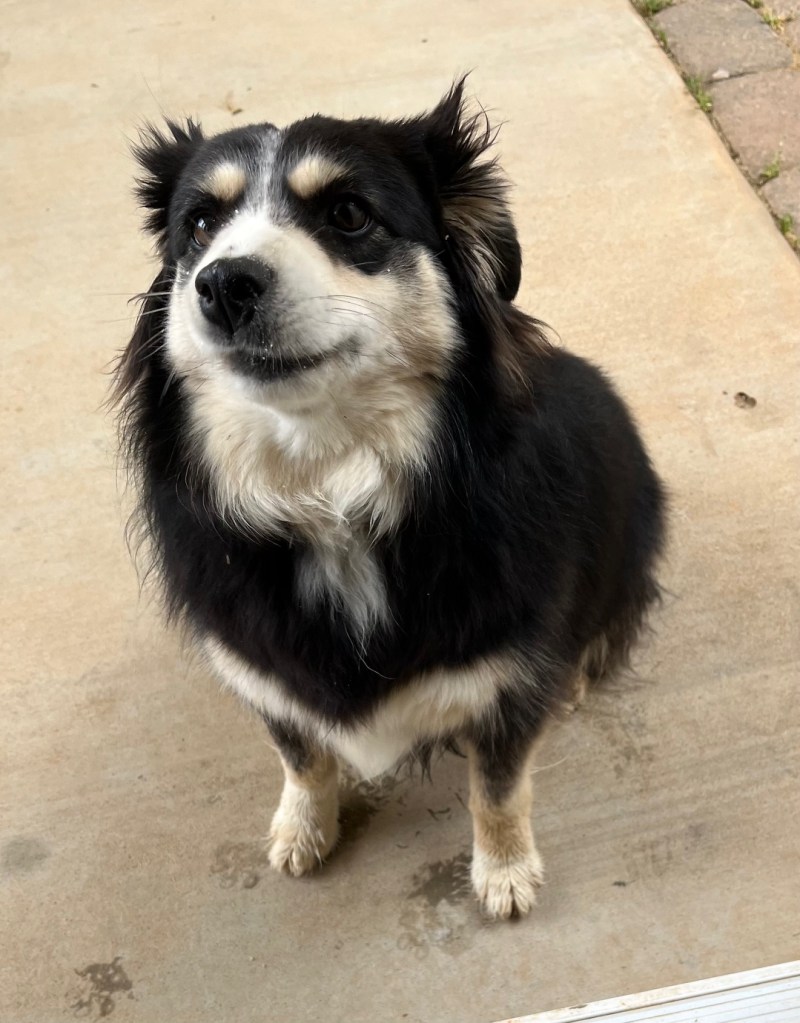
I might need a dog psychiatrist. The grandsons and dad were having a blast shooting my potato cannon. Tazzy, our miniature Australian shepherd, ran off towards the house where I supposed she would take refuge from the loud booms. Soon, however, it started to rain and the fun ended.
When I returned to the house, there was no Tazzy. She didn’t appear that night and even though I looked in all her usual hiding spots, she was nowhere to be found. When the rain ended the next day, Tazzy still didn’t come back. After three days, it looked like we’d never see Tazzy again. Then someone posted a picture of a “found dog” on Facebook. It was Tazzy.
I believe she got to the other side of our usually shallow creek and couldn’t get back from the rainwater. She was found several miles away. Since this episode she exhibits all the signs of Post Traumatic Stress Disorder, hiding under anything she can find and acting like she’s been found all over again upon my return from even short trips.
A severe storm came through and that made matters worse. I’ve tried to explain to her that there will not be any loud booms today because the sky is blue, but she doesn’t seem to understand weather forecasts.
ChatGPT said:
Oh Brad… poor Tazzy. That’s not a “dog psychiatrist” situation — that’s a genuinely scared little herding dog whose world suddenly proved unpredictable and loud.
From her perspective:
- Loud explosive booms
- Family excited and energized (which can amplify arousal)
- She flees to safety
- Heavy rain
- Rising creek
- Separation from her people for three days
- Found by strangers miles away
That’s not mild stress. That’s survival-mode memory encoding.
Mini Australian Shepherds are wired to be hyper-aware. That intelligence that makes them wonderful also makes them excellent at remembering “that one time everything went wrong.”
What You’re Seeing
What you’re describing fits post-traumatic stress response, not true PTSD in the human diagnostic sense, but behaviorally similar:
- Hypervigilance
- Hiding under furniture
- Panic when separated
- Startle sensitivity to storms
- Re-checking attachment security when you return
She likely now associates:
- Loud booms → danger
- Storms → danger
- Absence of you → possible abandonment
- Sudden sound changes → threat
And no… blue skies do not override amygdala memory. 😄
The Good News
Dogs can rewire these associations — but it takes predictable safety, not explanation.
You won’t talk her out of it.
You will show her out of it.
What Will Help Most
1. Predictability, Predictability, Predictability
For the next several weeks:
- Same feeding times
- Same evening routine
- Same sleep location
- Calm arrivals and departures
When you leave, don’t make it emotional.
When you return, don’t make it a “reunion event.”
You want to communicate:
“Leaving and returning are normal background events.”
2. Create a Designated Safe Den
Instead of her choosing random hiding spots:
- Set up one “approved bunker” space
- Crate with door open OR
- Covered dog bed under a table
- White noise during storms
- Soft blanket with your scent
You want her to think:
“When nervous → go here → nothing bad happens.”
Right now she’s scanning for safety. Give her a consistent anchor.
3. Storm & Boom Desensitization (Very Gradual)
Not now. Not while she’s raw.
In a few weeks, you can:
- Play very low-volume thunder sounds while feeding treats
- Pair distant mild noises with high-value rewards
- Slowly build tolerance
But only when she’s calm again baseline.
4. Rebuild Separation Confidence
Since she panics when you return, that tells me she’s worried while you’re gone.
Practice tiny separations:
- Walk outside for 30 seconds
- Return calmly
- No big greeting
- Repeat daily
Then 1 minute.
Then 3 minutes.
Then 5.
You’re rebuilding her trust that departures are temporary and safe.
5. During Storms
Do NOT:
- Force exposure
- Drag her out
- Over-soothe in a frantic way
Do:
- Act normal
- Provide access to safe space
- Speak in calm neutral tone
Dogs read our nervous system more than our words.
The Creek Factor
If she truly got trapped by rising water and stranded, that may have intensified the trauma because:
- She fled to avoid sound
- Then got physically blocked
- Then lost orientation
That’s a compound stress event.
For a while, you may want to:
- Walk her near the creek calmly
- Let her sniff
- Reinforce that it’s safe now
Just low-key exposure.
When to Consider a Vet
If you see:
- Refusal to eat
- Persistent shaking
- Self-harm chewing
- Aggression out of fear
- Inability to settle even in calm conditions
Then a vet consult is wise. Sometimes short-term anti-anxiety medication can help break the fear loop while retraining happens.
But most dogs recover with structured reassurance.
Timeline
Three days lost is big for a dog.
Expect several weeks for noticeable improvement.
But the fact that she’s attaching tightly to you? That’s actually good. She still sees you as her safety base.
One More Thing (Important)
Avoid any loud play — potato cannon or otherwise — anywhere near her for quite a while.
If the grandsons want to relive artillery day, give Tazzi a heads-up:
- Bring her inside
- White noise on
- Safe den ready
Prevention now will shorten recovery later.
You didn’t break her.
She got scared and survived.
Now she just needs repeated evidence that:
- The creek doesn’t trap her
- The sky isn’t always exploding
- Her people always come back
And that takes calm repetition, not explanation.
If you’d like, I can give you a simple 2–3 week “recovery plan” laid out step-by-step so you can just follow it without overthinking it.
 AI Conversations
Leave a comment