
You said:
Please review for me the technical specs and effectiveness of Rapid Radios.
Note: I could have figured all this out on my own, but it would have taken an hour or two instead of minutes. I wanted to go behind the marketing hype.
ChatGPT said:
Here’s a clear technical and effectiveness review of Rapid Radio technology and related devices from Rapid Radios — the brand best known for its “nationwide walkie-talkies.”
📡 What Rapid Radios Are
Rapid Radios are handheld push-to-talk (PTT) devices that look like walkie-talkies but don’t use traditional radio frequencies (like VHF/UHF) for range. Instead, they use cellular data (LTE) to send voice communications over long distances wherever there is cell coverage.
That makes them more like a PTT over cellular device than a classic radio — something closer to an LTE-based communicator than a simple walkie-talkie.
📊 Core Specs & Features
What’s typically promoted (from manufacturer info & reviews):
✅ Connectivity & Range
- Nationwide LTE connectivity — works across the U.S. wherever there is cell signal.
- Unlimited range (theoretically anywhere LTE exists).
- Push-to-Talk (PTT) operation like a walkie-talkie.
🔋 Power & Hardware
- Battery life: Manufacturer claims long standby and multi-day use (often up to ~5 days typical usage).
- Rugged design: Weather resistance and built for outdoor use depending on model.
🔐 Data & Use
- Encryption: Some reviews mention encrypted voice data.
- No typical programming or licensing needed — it works after turning on.
- Group chat support: Can create talk groups across users.
📱 Plan/Cost Structure
- They are marketed as no monthly service fees, but Radios come with a SIM service that typically needs annual renewal (often around ~$50/year per radio after the first year).
👍 Strengths (Effectiveness)
✔ Long-range communication wherever LTE exists
- Unlike traditional low-power radios (limited to ~5–10 miles), LTE gives coast-to-coast coverage.
✔ Simple PTT operation
- Very easy to use — similar to push-to-talk in phones or old Nextel style.
✔ No radio licensing required
- You don’t need an FCC license to operate them.
✔ Positive user reviews on ease of use & clarity
- Many users report clear communications and easy setup, especially for families and travel.
👎 Limitations & Considerations
⚠ Dependence on Cellular Coverage
- If LTE/cell signal is absent, the radios won’t work at all.
They don’t provide communication in truly off-grid or grid-down situations (no built-in RF fallback like VHF/UHF).
⚠ Not a Traditional Emergency Radio
- Because they rely on cell towers and data, in widespread outages or disasters where networks fail, they can be effectively useless.
⚠ Some Community Skepticism
- Radio enthusiast communities question claims and marketing language — e.g., how the “no fee” system truly works and range claims beyond cellular limitations.
⚠ Mixed Customer Service / Cost Experiences
- Some reviews praise support and ease, while others report issues with service, refunds, or yearly fees unexpectedly arising.
🧠 Practical Use Cases
Good Fit For:
- Family communication across cars or distant locations when cellular data exists.
- Travelers & outdoor groups staying in cellular coverage (campgrounds, highways).
- Those who want push-to-talk simplicity without phones.
Not Ideal For:
- Critical emergency communication when infrastructure might fail (e.g., natural disaster grid-down scenarios).
- Professional or licensed radio operations requiring interoperability with public safety or commercial radio systems.
🧾 Summary
Rapid Radios are LTE-based, nationwide PTT devices blending walkie-talkie simplicity with cell network reach. They’re innovative for everyday long-distance communication — but they are not true RF radios, and rely entirely on cellular infrastructure. For many users (families, campers, travelers) they provide convenience and broad coverage; for truly resilient emergency or professional communications, traditional licensed radios may be more dependable.
You said:
Okay, so let’s say a family of five gets this device and one person wants to call one or more of the others but not the entire universe of device users. How does this work?
ChatGPT said:
Great question — and this gets to the heart of how Rapid Radios actually function.
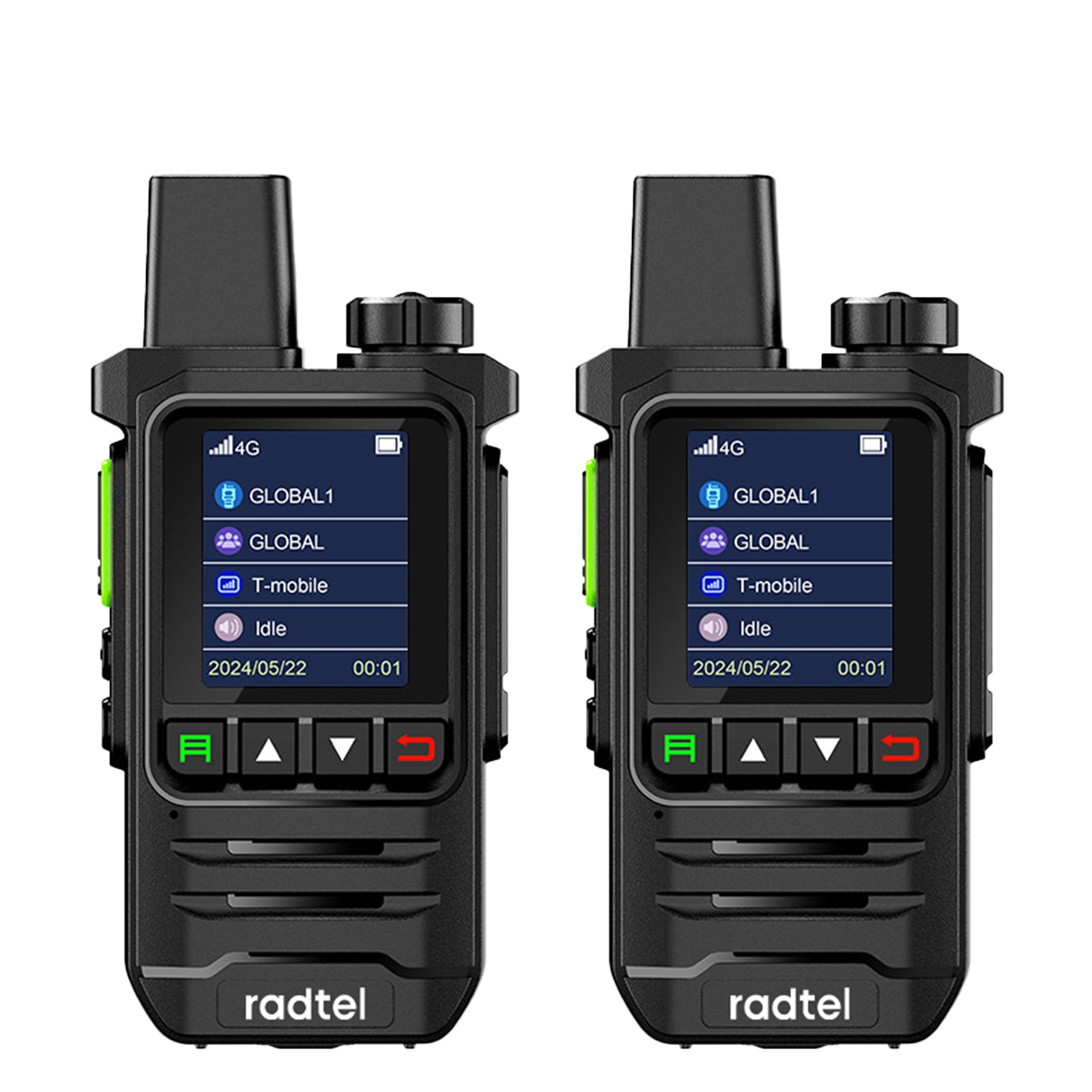
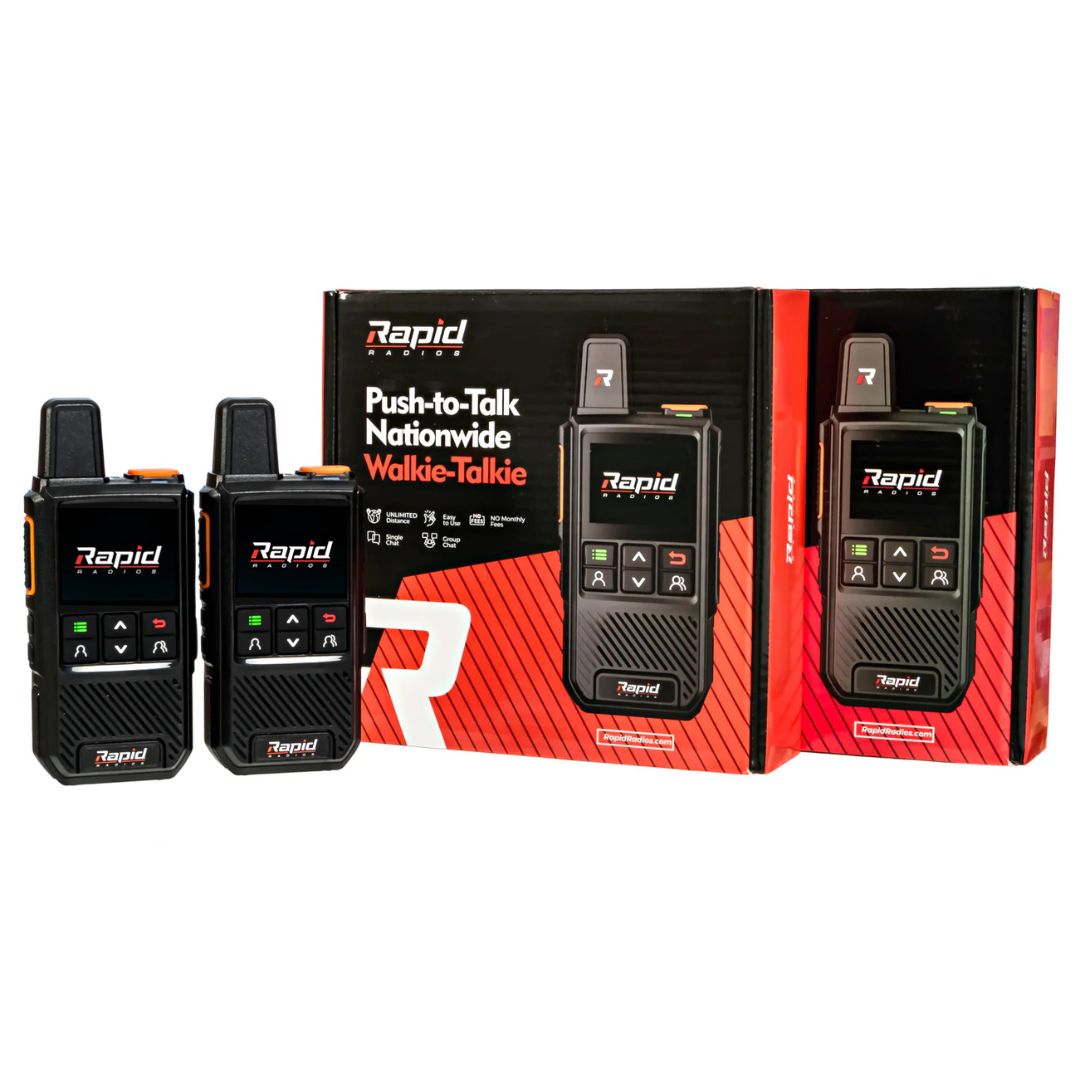
Rapid Radios Nationwide PTT Walkie Talkie
The Short Answer
They do not broadcast to everyone who owns a Rapid Radio.
Instead, they operate in private talk groups, similar to:
- A private group chat
- Old Nextel “Direct Connect”
- Zello or other push-to-talk apps
- Commercial LTE PTT systems
How It Works for a Family of Five
When you purchase multiple devices together:
1️⃣ They Are Pre-Programmed into a Private Group
All radios in your order are typically assigned to a private talk group ID.
That means:
- Only those radios hear each other.
- Your transmissions do NOT go out to other Rapid Radio customers.
Think of it like having your own private channel — but it’s digital and cellular-based.
2️⃣ Talking to One vs. Talking to All
Here’s the key distinction:
📢 Group Call (Default Mode)
- Press PTT
- Everyone in your family group hears it
- This is the standard behavior
👤 Private 1-to-1 Call (If Supported by Model)
Some LTE PTT systems allow:
- Direct individual calls (Radio A → Radio B only)
- Not heard by the rest of the group
Whether Rapid Radios supports individual private calling depends on:
- Firmware version
- How the radios were provisioned
- Whether that feature is enabled
Most marketing suggests they are primarily group-oriented, but some versions allow individual calling.
What Makes This Possible?
These radios:
- Have a SIM card
- Connect to LTE data
- Register to a cloud-based push-to-talk server
- That server routes audio only to radios inside your talk group
So technically it’s more like:
A cloud voice server routing digital packets
Not radio waves broadcasting
What It’s NOT Doing
❌ It is NOT:
- Broadcasting on an open RF frequency
- Like FRS/GMRS where anyone on the channel can hear
- A shared “Channel 1 for everyone” system
Each family is logically separated at the network level.
Practical Example
Family of five:
| Person | Radio |
|---|---|
| Dad | Radio 1 |
| Mom | Radio 2 |
| Daughter | Radio 3 |
| Son | Radio 4 |
| Grandpa | Radio 5 |
If Dad presses PTT:
- All five hear it (group mode)
If private calling is enabled and Dad selects Mom:
- Only Mom hears it
No one outside that programmed group hears anything.
What You Should Confirm Before Buying
If selective 1-to-1 calling matters, you’d want to confirm:
- Does this specific model support private calls?
- How do you switch between group and private?
- Can additional radios be added later to the same group?
- What happens if someone’s service subscription expires?
Important Caveat (From a Technical Perspective)
Because these rely entirely on LTE:
If cell towers go down:
- The talk group disappears
- No fallback RF communication exists
That’s the big difference from ham, GMRS, or commercial radios.
 AI Conversations
Leave a comment